

 Written by
 What if we measured the digital maturity of a city not only by the services it digitises, the data it collects or the AI it deploys — but by the agency it gives to the people who live there?
For decades, the idea of the “smart city” has been closely associated with the ability to see and manage the city through data. Sensors measure traffic, air quality, energy consumption or heat. Digital platforms make public services more efficient. Increasingly, AI promises to combine these datasets, identify patterns and help public administrations make better decisions. There is enormous potential in this. But digital ethics requires us to ask a question that goes beyond what technology can do:
What kind of relationship between people, technology and public institutions are we creating?
Imagine an AI system designed to identify urban heat vulnerability. It combines accurate environmental, demographic and building data. Yet it might still miss that a park is inaccessible to many older residents, that a particular bus stop has no shade, or that certain flats barely cool down at night. The data may be correct — and still fail to represent people’s lived reality. This is why I believe we need to move the smart-city conversation beyond digital services and towards digital agency.
Digital agency means the capacity to use, understand, shape and, when necessary, challenge the digital systems that affect our lives. It suggests that we should measure digital progress not only by technological capability, but also by how much capacity to act technology gives to people and communities.
People are part of digital infrastructure
Sometimes this starts with something surprisingly simple. In Berlin, Digital-Zebra offers support in public libraries to people struggling with digital processes. Someone might need to book a public-service appointment, fill out an online form or simply understand what a website is asking them to do. A person is there to help. It sounds almost mundane. But it points towards a broader understanding of digital infrastructure.
When we use that term, we usually think of broadband, cloud services, data platforms or digital identities. But what if the person sitting next to you in a library is also part of digital infrastructure? A service being digitally available does not automatically make it accessible. People, places and trust can bridge the gap between digital availability and actual accessibility. Digital-Zebra creates something like a human interface to digital government, reminding us that human-centred digitalisation is not simply about designing a better interface. It is also about building the social infrastructure that allows people to navigate digital systems with agency.
From users to co-creators
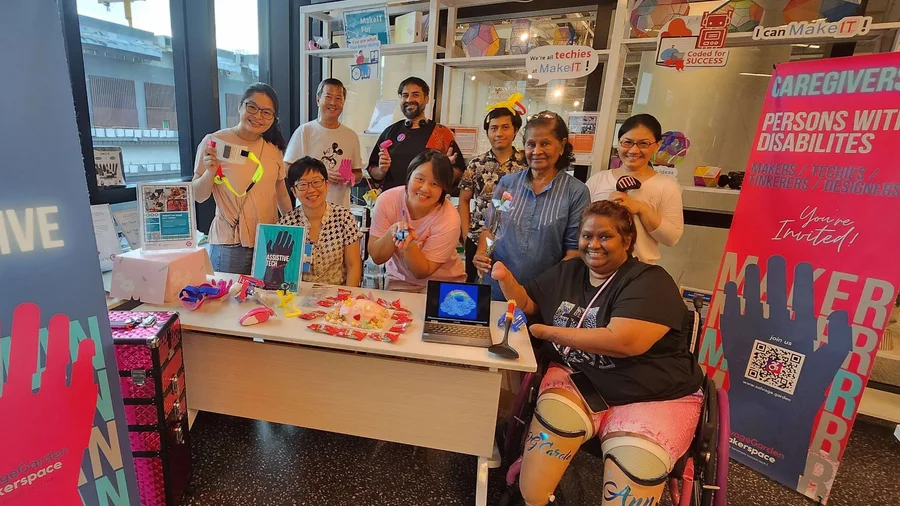
Agency, however, cannot stop at enabling people to use systems designed by others. Across the Global Innovation Gathering network, we see many examples of communities moving from being users or beneficiaries of innovation to becoming co-creators. In Singapore, GIG member SalvageGarden brings people with disabilities together with caregivers, makers, designers and medical professionals to develop assistive technologies. Instead of designing a product first and asking people with disabilities to test it afterwards, they are involved in defining problems, prototyping and developing solutions.
In Brazil, Casa Criatura’s Cirandar project applies a similar logic to circular cities. Waste-picker cooperatives, residents, students and other local actors transform plastic waste into furniture for public spaces. Students do not simply learn about sustainability; they explore local ecosystems, engage with recycling cooperatives and participate in making things for their own communities. These projects are very different, but they share a principle: Design with, not for. Agency means having the opportunity not only to receive innovation, but to influence what is built, which problems are addressed and what knowledge matters in the process.
Who gets to produce knowledge about the city?
This becomes particularly important when we look at data. In Indonesia, GIG member Common Room works with local communities on open-source environmental monitoring. Sensors can collect information about water levels, salinity or other environmental conditions relevant to agriculture, fisheries and climate resilience. The interesting question here is not only what the technology measures.
It is who gets to measure. Data do not simply exist. Someone decides what is measured and where. Someone controls the instruments. Likewise, someone has access to the resulting information. And someone determines which knowledge is considered reliable and relevant. Open-source technology can change this relationship. When communities can understand, build, modify and repair their own instruments, they can move from being recipients of environmental information to producers of knowledge about their own surroundings.
A related approach can be found in Rio de Janeiro, where data_labe works with communities on data, technology and territory. Through CocôZap, for example, residents of Maré Favela can report sewage, flooding and waste problems via WhatsApp. Individual experiences can become structured information. What begins as “there has been sewage running down my street for days” can become evidence of a recurring pattern.
This changes the position of communities in relation to institutions. People who may be insufficiently represented in official datasets become producers of knowledge about their own city. However, this does not mean that official data are bad and citizen-generated data are good. Citizen-generated data can also be incomplete and biased. Participation is unequal, and communities have very different resources. The more interesting question is: How can different forms of knowledge meet?
A sensor tells us what it was designed to measure. A citizen tells us what matters.
This question is not new. Long before IoT and AI became central to the smart-city debate, crowdsourcing platforms such as FixMyStreet enabled residents to report potholes, broken streetlights and other problems to local authorities. Citizens became, in a sense, sensors of their own cities. Today, many forms of observation can be automated. Sensors can collect information continuously and at a scale humans cannot. However, automation also changes the relationship between people and urban knowledge.
The answer is not to choose between automated sensing and citizen-generated data. It is to create infrastructures in which sensor data, administrative information, scientific knowledge and lived experience can complement — and sometimes challenge — one another. This is one of the central questions emerging from the examples in our network. And it leads to perhaps the most important question of all: Can this knowledge actually influence a decision?
Data can’t provide equal participation
Citizen-generated data is not automatically participation. Open data is not automatically data justice. And inviting people to contribute knowledge does not automatically give them agency. Imagine a community spends a year collecting information about heat, air quality or flooding. Where can this knowledge enter the administration? Who can receive and validate it? How can it be connected to planning processes? And do people ever find out what happened as a result?
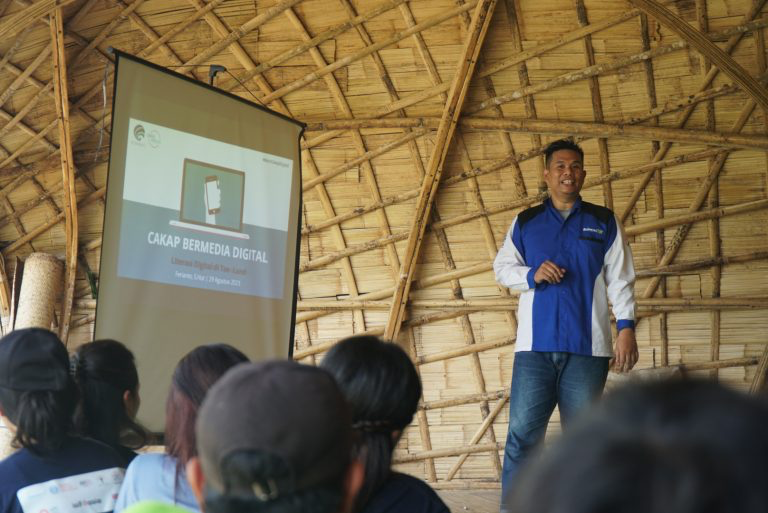
If we ask communities to provide data, attend workshops and share local knowledge and they never hear what happened afterwards, participation can become another form of extraction.We know how to create pilots. The harder question is how to create lasting interfaces between community knowledge and public institutions. Some of these interfaces are technical: open standards, interoperable systems and accessible data. Others are institutional and social: libraries, city labs, community organisations, participatory processes, community data stewards and public officials with the capacity and mandate to work with knowledge produced outside government. Agency requires feedback loops.
From smarter systems to greater agency
What does this mean for cities trying to put digital ethics into practice? Three principles stand out.
- Design for agency, not just efficiency. Public administrations should of course use public resources responsibly. But efficiency alone cannot tell us whether a digital system creates public value. We should also ask whether people can access it, understand it, contribute to it and challenge it.
- Combine different forms of knowledge. Automated sensors and AI can reveal patterns humans cannot see. Communities can reveal realities our formal systems do not know to look for. Digital infrastructure must enable these forms of knowledge to interact rather than assuming that one can replace the other.
- Keep public technology inspectable. As systems become more complex, the risk of new asymmetries grows. The institution may know the data, rules and model, while a citizen sees only the outcome. Public technology should therefore remain as transparent, understandable and contestable as possible.
These are not simply design principles. They concern the distribution of power in a digital society. Digital systems can create powerlessness or agency. They can increase the distance between people and public institutions. Or create new connections.
A small Berlin project offers a useful final image. Gieß den Kiez makes city data about Berlin’s street trees accessible, so residents can identify trees in their neighbourhood and help water them. It is a modest example. But it reverses an important part of the conventional smart-city logic: Instead of only collecting data about people, cities can make data available for people so they can act. That brings us to a question that might be more useful than asking how technology can make our cities smarter: How can technology help people shape their city?
Invest in digital commons, not only in digital control.
The digital city does not only need better sensors, smarter algorithms and more efficient services. It also needs digital commons, open technologies, spaces where people can find support, tools through which communities can produce knowledge, and interfaces that allow this knowledge to reach public decisions.
Perhaps the smartest city of the future will not be the one with the most technology, but the one that uses technology to increase the capacity of its administration to act, but further, the agency of the people who live there.