|
|
|
|
Welcome to July'26 Edition of GIGinsights!
|
|
Summer's in full swing, and July brought a fresh wave of momentum across the network! We're happy to share that the Hans Sauer Foundation is backing GIG for a second time, this round supporting the first module in our Inclusive Circularity learning series. We also reflect on the first leg of the make-a-thek bus tour exploring circular fashion and craft, and revisit our recent make-a-thek community call bringing together voices from Greece, Brussels, and Lithuania on what makes community-driven making work. Looking back at GIG Week 2026, we also revisit our time at Open Hardware Summit's first-ever Germany edition and our hands-on workshop with HILO Textiles' open-source spinning machine. Plenty to read, explore, and get inspired by this month. Let's go! 🌍✨
|
|
|
|
|
|
|
|
General Updates From the GIG Community and Team Members 📰
|
|
|
GIG is funded by Hans Sauer Foundation again!
We're happy to share that the Hans Sauer Foundation is supporting GIG for the second time, this time backing Material Literacy and Resource Assessment (MLRA), the first module in our Inclusive Circularity learning series. Building on the open curriculum from Circular Material Valuer (CMVC), MLRA will co-create a free, open-access course with open workshops, repair cafés, and makerspaces across our network, turning practitioners' hands-on knowledge of local materials into learning resources anyone can use, adapt, and translate. It will launch on the Global Innovation Academy, GIG's community learning platform currently in the works. Stay tuned!
|
|
|
|
make-a-thek bus tour reflection
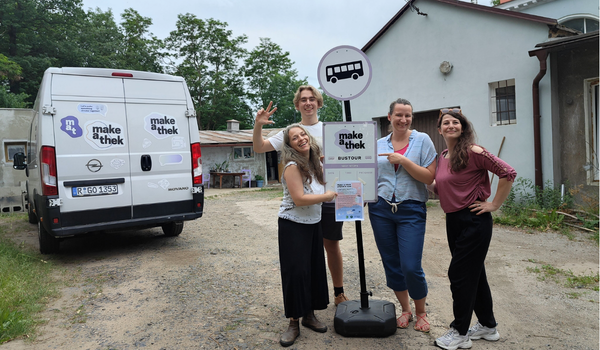
In June, the make-a-thek team set off across Germany, Czechia, and Poland to explore circular fashion and craft on the ground. In Ebersbach-Neugersdorf, Germany, an empty textile factory raised hard questions about reusing industrial-era infrastructure at a human scale. In Łódź, Poland — once Europe's largest textile hub — former factories are being reinvented as cultural and innovation spaces, showing that industrial heritage can be an asset rather than a burden. Along the way, weaving workshops, libraries, and second-hand boutiques revealed how "third spaces" sustain community and democratic resilience. Throughout the tour, one thread kept surfacing: circular fashion isn't just an environmental fix, it's a cultural shift.
|
|
Community call recap: Crafting connected communities
Our latest make-a-thek community call, hosted together with the European Crafts Alliance, explored how making together shapes community through people, place, and resources. Sole from Habibi.Works, Greece shared how a makerspace near a refugee camp in Greece builds trust through sewing and bike repair, while Nadia Everard from La Table Ronde de l'Architecture, Brussels, described training people in traditional building crafts from a 17th-century Alsace farmhouse. Gabija from Sodas 2123 in Vilnius, Lithuania, showed how a self-governed cultural centre runs on shared tools and space. Across all case studies, one conviction held: making with people, not for them, is what builds lasting connection. Thank you to our speakers for sharing your stories on community!
|
|
GIG at the Open Hardware Summit 2026
The GIG community had an amazing time at the Open Hardware Summit 2026 in Berlin, held May 23rd and 24th at TU Berlin. For the first time in its history, the summit came to Germany, and our network showed up across the programme! Saad Chinoy gave a lightning talk on harvesting parts from old 3D printers instead of sending them to landfill, while Regina Sipos turned innovation bias into hands-on objects visitors could test and question. Ricardo Ruiz joined the panel "Distributed Roots, Global Fruits," asking who gets to define innovation as well. It was also wonderful catching up with GIG members and learning about their projects, a great reminder of why open hardware matters so much!
Read the full recap.
|
|
|
|
Hands-on with HILO's open-source textile tech
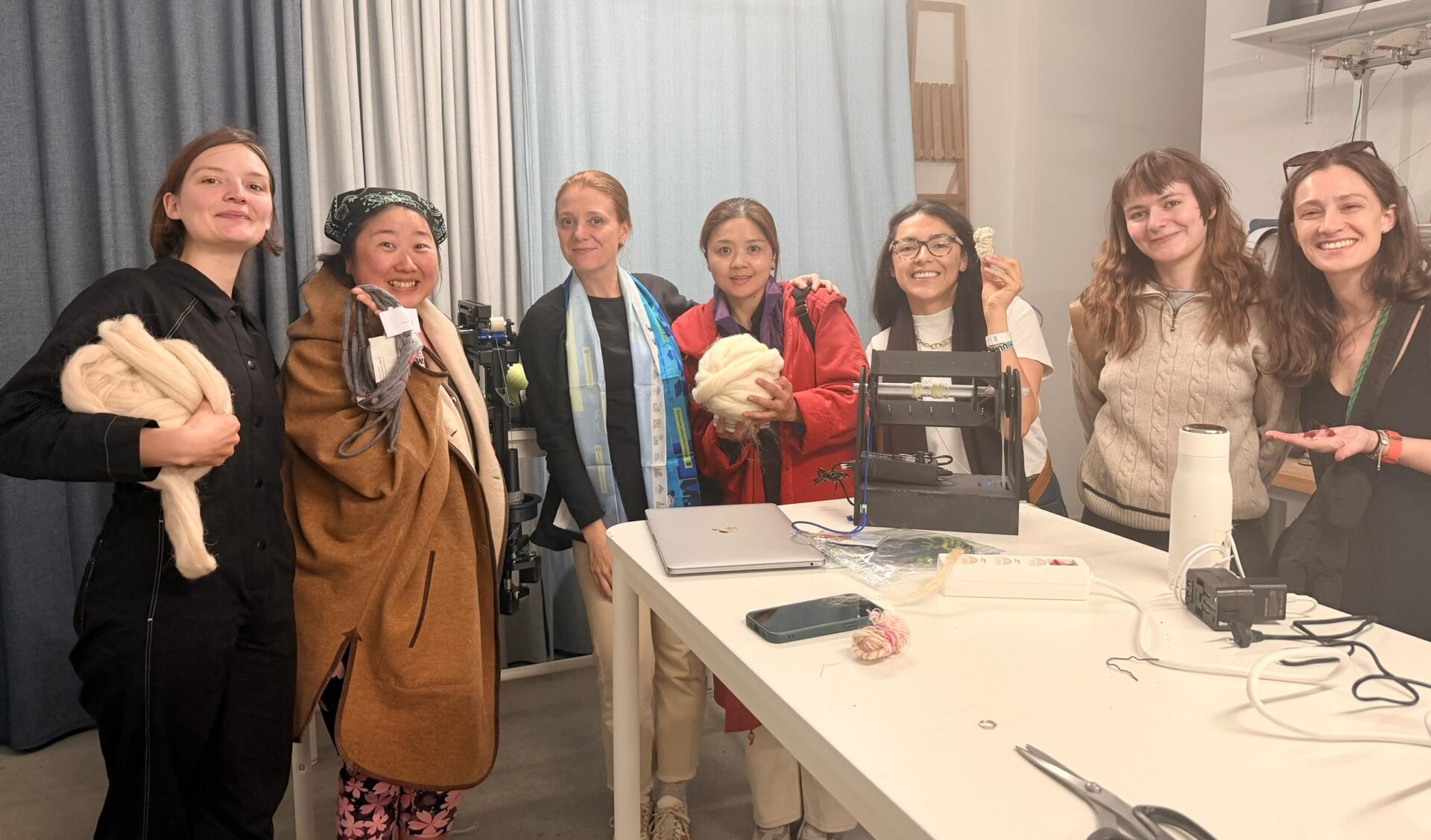
During GIG Week 2026, our community got hands-on with open-source textile machines developed by HILO Textiles. Members and friends explored the HILO Spinning Machine, a desktop tool that turns local wool, regional materials, recycled fibres, and bio-based solutions into customised yarn. We learned how to twist existing yarns into new designs, using features like elasticity through overtwist, all made possible by HILO's open-source software for shaping yarn properties. It was a great reminder of how open hardware and shared knowledge can reshape local, sustainable manufacturing, one spool at a time.
|
Call for interest: Grassroots Horizon Europe partner
Missing the grassroots innovation piece in your Horizon Europe consortium? GIG offers a network of grassroots innovation hubs, makerspaces, and communities in 55+ countries. We've coordinated and partnered on several Horizon 2020 and Horizon Europe projects, including Careables, CoAct Europe, make-a-thek, mAkE, and Critical Making Europe, where communities co-designed and prototyped alongside researchers, not just ticked engagement boxes. We bring community-governed methodologies, expertise in circular economy, digital rights, and AI governance, plus dissemination capacity built on real relationships.
|
|
Want a partner who connects research to people building impact on the ground? Email [email protected].
|
|
|
|
|
GIG Members' Project Highlights ✨
|
|
Appropedia
|
Emilio Velis and the Appropedia team are promoting the Wellcome Snakebite Innovation Prize, a global competition tackling snakebite envenomation, one of the world's most neglected public health crises, affecting over 5.8 billion people in at-risk areas. The prize offers a £6.25 million pool to turn promising ideas into scalable, life-saving solutions. In July, Appropedia brought together engineers, tech developers, logistics experts, and snakebite specialists across Latin America to search for solutions. Next up, Appropedia will host a Snakehack on 6th & 7th August, hosted in Spanish with live Portuguese subtitles, to co-develop fundable proposals. Learn more about the Snakehack here.
|
|
|
Internet of Production Alliance
|
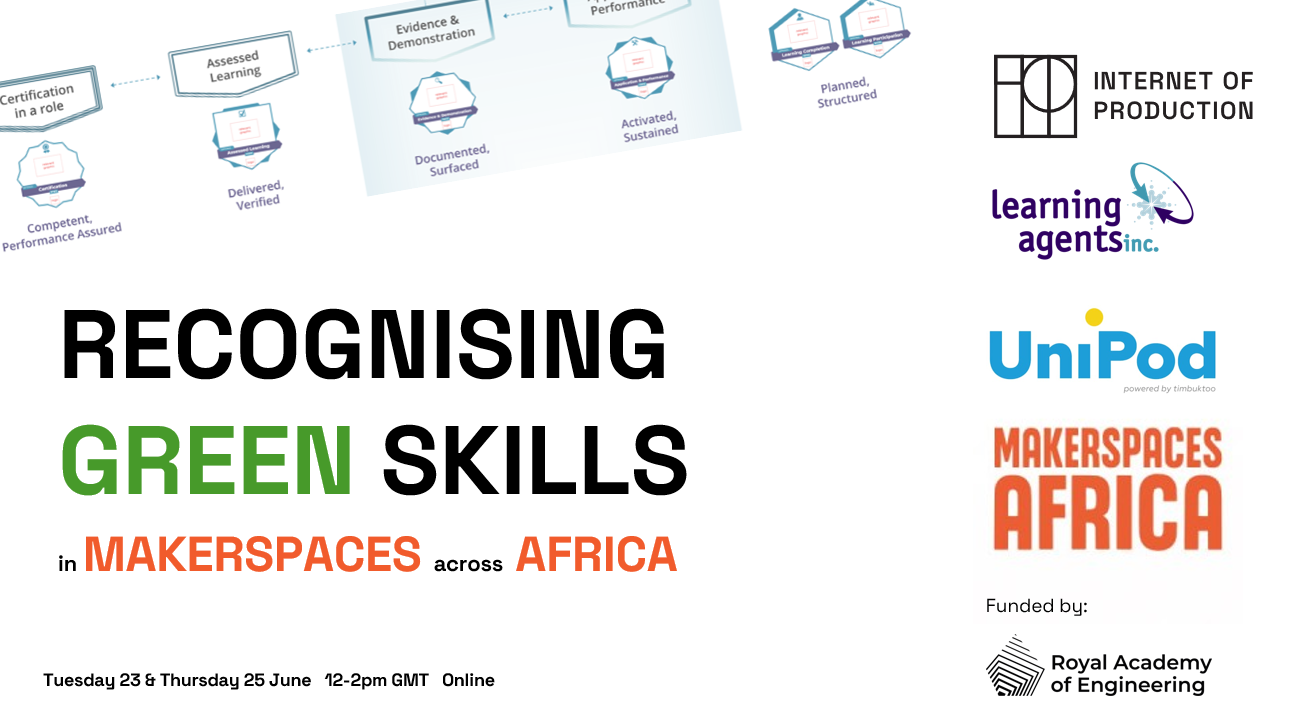
Andrew Lamb and the Internet of Production Alliance team are developing Digital Badges to recognise the 'Green Skills' essential for a sustainable future, spanning renewables, recycling, repair, organic agriculture, green buildings, and e-mobility. Early this year, the team met open-recognition experts in Nairobi, Kenya, to tackle persistent skills gaps, sparking exploration of toolkits that let governments and employers recognise non-formal learning. Makerspaces emerged as a natural fit, since many makers are self-taught. Building on this, IOPA secured a trial in June with Makerspaces Africa and the UNDP Timbuktoo Programme's UniPod network, running a two-day workshop for African makerspace leaders to co-create open Digital Badges, boosting recognition, job prospects, and livelihoods. The workshop recordings are publicly available here: Part 1 and Part 2.
|
|
|
|
|
|
|
|
|
Events:
|
July 27–31, 2026 – FAB26 | Boston, USA
|
A Fab Foundation gathering for Fab Lab leaders, makerspace practitioners, and civic innovators, covering digital fabrication, open machines, local production, and Fab City models.
|
Software Freedom Conservancy's Free and Open Source Software Yearly conference, focused on software freedom, community-led tracks, and discussion of issues across the FOSS ecosystem.
|
One of Asia's largest open-source community conferences, co-hosted in 2026 with UbuCon Asia, for open-source software, community infrastructure, and regional FOSS networks.
|
A Linux Foundation event for open-source developers, maintainers, technologists, community leaders, and contributors, covering code, community, governance, open AI/data, and OSS sustainability.
|
A large maker festival for inventors, educators, artists, and engineers, covering electronics, robotics, 3D printing, coding, upcycling, craft, repair culture, and public-facing innovation.
|
|
August 30–September 5, 2026 – FOSS4G 2026 | Hiroshima, Japan
|
The global Free and Open Source Software for Geospatial conference, with workshops, main conference sessions, community events, and code sprints around open mapping, geospatial tools, and open data infrastructure.
|
An international conference for craft researchers, designers, makers, and sustainability practitioners, covering craft innovation, circular production, material futures, and digital fabrication.
|
A Fab City network session for civic innovators, local production advocates, and circular economy practitioners, covering distributed manufacturing, regenerative systems, and locally productive cities.
|
Opportunities:
|
This award funds practical, community-based projects reducing climate risks in informal settlements exposed to hazards like flooding, heat, and storms. Open to non-profit organisations in low- and middle-income countries.
|
|
This fellowship funds up to 10 early- and mid-career researchers studying how children thrive - spanning children in crisis settings, inclusion, and learning in an AI-enabled world.
|
|
This microgrant program backs grassroots nonprofits designing joyful, in-person, community-centered activities that counter loneliness and social disconnection.
|
|
A year-long fellowship from the Global Landscapes Forum and the Youth in Landscapes Initiative, supporting young ecological restoration practitioners with trust-based funding, mentorship, and capacity development.
|
|
This fund backs open source projects reshaping social media around public interest values, countering algorithmic manipulation, platform capture, and misinformation. Open to individuals, non-profits, SMEs, and research organisations.
|
Deadline: Rolling - next: 1 August 2026
|
|
This fund supports nonprofits strengthening cybersecurity for civil society and Internet core infrastructure, prioritising organisations serving the Global Majority.
|
|
This RFP funds organisations testing whether AI-enabled direct-to-consumer engagement tools can improve contraceptive uptake, continuation, and informed method choice among women and girls of reproductive age.
|
|
A Scottish nonprofit competition backing youth-led startups and projects delivering measurable social or environmental impact, including tech for good, digital tools, and community innovation.
|
|
|
|
|
|
|
Support GIG 🎯
|
We invite you to join us in driving innovation for social impact worldwide as a supporting member.
|
Why Support GIG? 🤝
- Drive long-term growth and sustainability for a global network of innovators.
- Promote inclusive, sustainable innovation through knowledge exchange and learning.
- Advance open hardware research and distributed manufacturing.
- Strengthen grassroots climate resilience efforts worldwide.
Ways to Support 🌟
Here are the suggested annual contributions:
Small Organisations: €300
|
|
For organisations with fewer than 50 employees or under €1 million budget
|
Large Organisations: €3,000+
|
For organisations with 50+ employees or €1 million+ budget
|
Contribute now or contact us to learn how your support can help social innovators create lasting change in communities worldwide.
|
|
|
|
|
|
👀 Stay tuned for more exciting updates next month! 💌
|
|
|
|
|
|
|