
 Written by
 A sewing machine 300 metres from a refugee camp in northern Greece. A farmhouse in Alsace, dating from the end of the 17th century, with a bell that still calls people to communal dinner. A row of benches in Vilnius made from the demolished pillars of a Soviet-era trade union mansion. Three scenes, three countries, one question running underneath all of them: what happens to a community when people make things together, with their hands, in a shared space?
That question sat at the centre of Crafting Connected Communities, the latest community call hosted by the European Crafts Alliance (ECA) as part of make-a-thek, the Horizon Europe project working to turn public libraries into open, accessible makerspaces. GIG is one of nine partners on make-a-thek, alongside ECA, Zentrum für Soziale Innovation, Fashion Revolution Germany, OpenDotLab, Public Libraries 2030, Ukrainian Makers Association, Fab City Foundation and IAAC. The project pairs heritage crafts with digital fabrication tools like 3D printers and laser cutters, and it is piloting the model in at least twelve libraries, nine across Europe and three beyond, with a mobile makerspace bus reaching rural areas in between.
Rachel, ECA’s programmes manager, opened the call by naming the three lenses the speakers would work through: people, how making creates belonging; place, how spaces shape identity; and resources, how sharing tools and skills builds circular, collaborative futures. Three organisations took each lens in turn, and none of them offered a model to copy & paste. What they offered instead was evidence, from very different contexts, that the same principles hold.
People: Habibi.Works
Sole, project coordinator and fundraising officer at Habibi.Works, started with values rather than furniture. The makerspace grew out of Soup and Socks e.V., a German organisation that began working in Katsikas refugee camp in northern Greece in 2016. The camp’s dynamics have changed since, and Habibi.Works now operates just outside it, still serving people on the move alongside local residents and international volunteers.
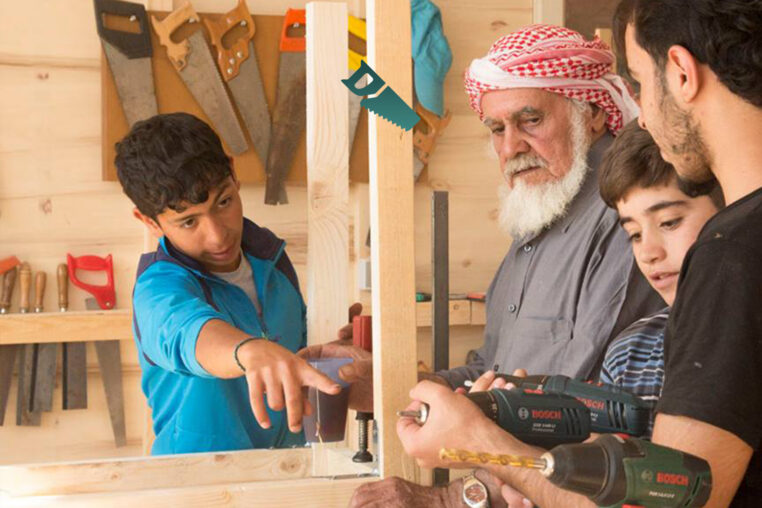
The working areas, a wood workshop, sewing atelier and bicycle workshop, sit beside a community kitchen, a garden, a gym open every day, a library that doubles as a language classroom, a media lab, a barber and beauty salon split into separate spaces for men and women, and a storytelling lab. Every working area has an expert, someone from the community or the team with a specific skill, but Sole was clear about what that expert does and doesn’t do: “We make with, not for.” A person arrives with a piece of fabric, or just an idea in their head, and the sewing machine, the fabric, the tools are offered. The rest comes from them.
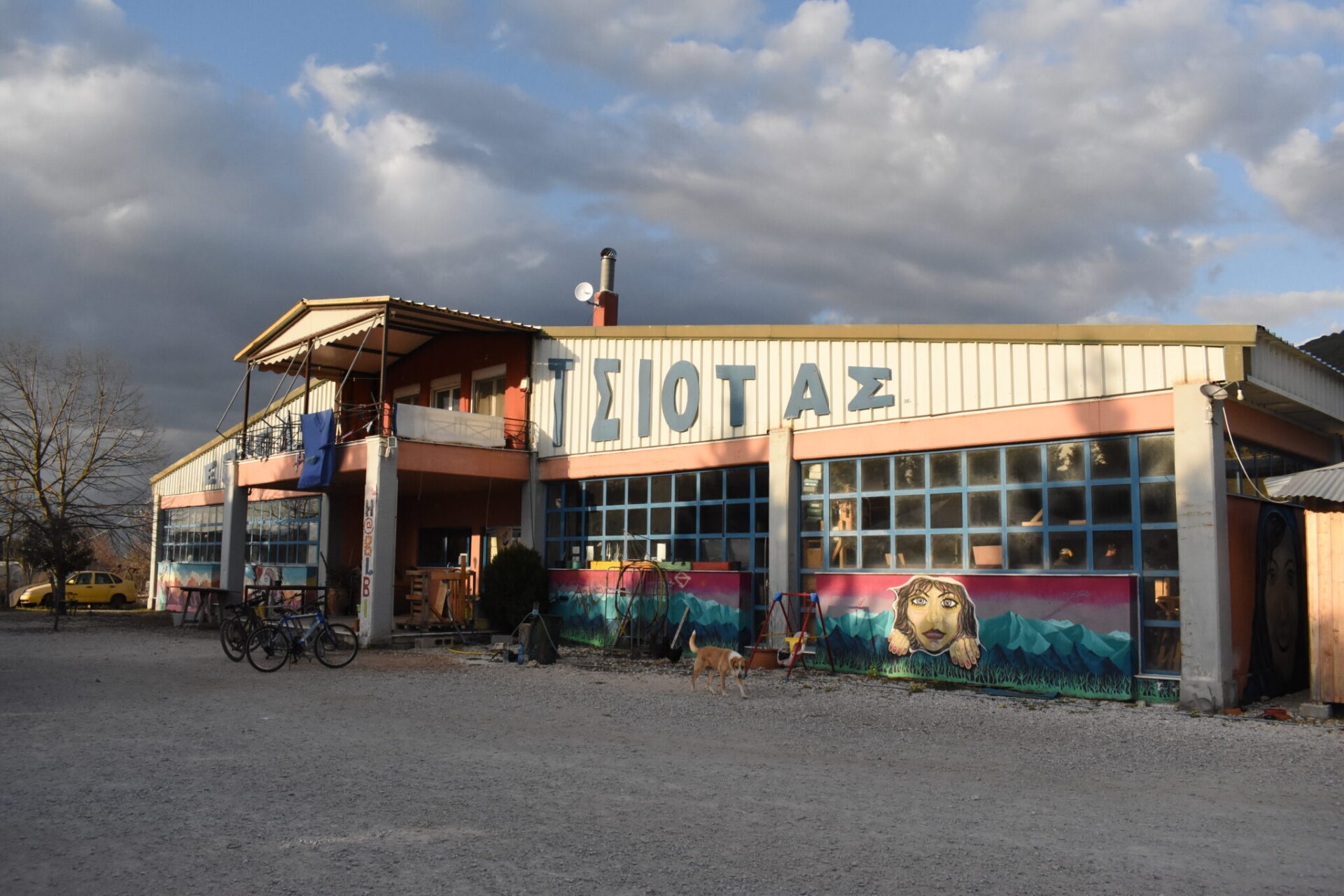
The bicycle workshop carries a second value: “We make, don’t take.” The camp sits at a distance from the city and its services, so a broken bike can cut someone off entirely. Fixing it matters practically. But Habibi.Works treats the person who arrives as the expert on their own life, not the mechanic. The team is there to support, not to take over the job. What gets built in the process, Sole said, is not just an object. It’s a sense of safety, connection, and hope.
Place: La Table Ronde de l’Architecture
Nadia Everard co-founded La Table Ronde de l’Architecture in Brussels, out of frustration with an architecture education that had, in her words, no real input on heritage, natural materials or ancestral technique. The association spent its early years in activism, drawing counterproposals for neighbourhoods facing demolition. Then it recognised a different problem: there simply weren’t enough architects or craftspeople trained to build the traditional way.
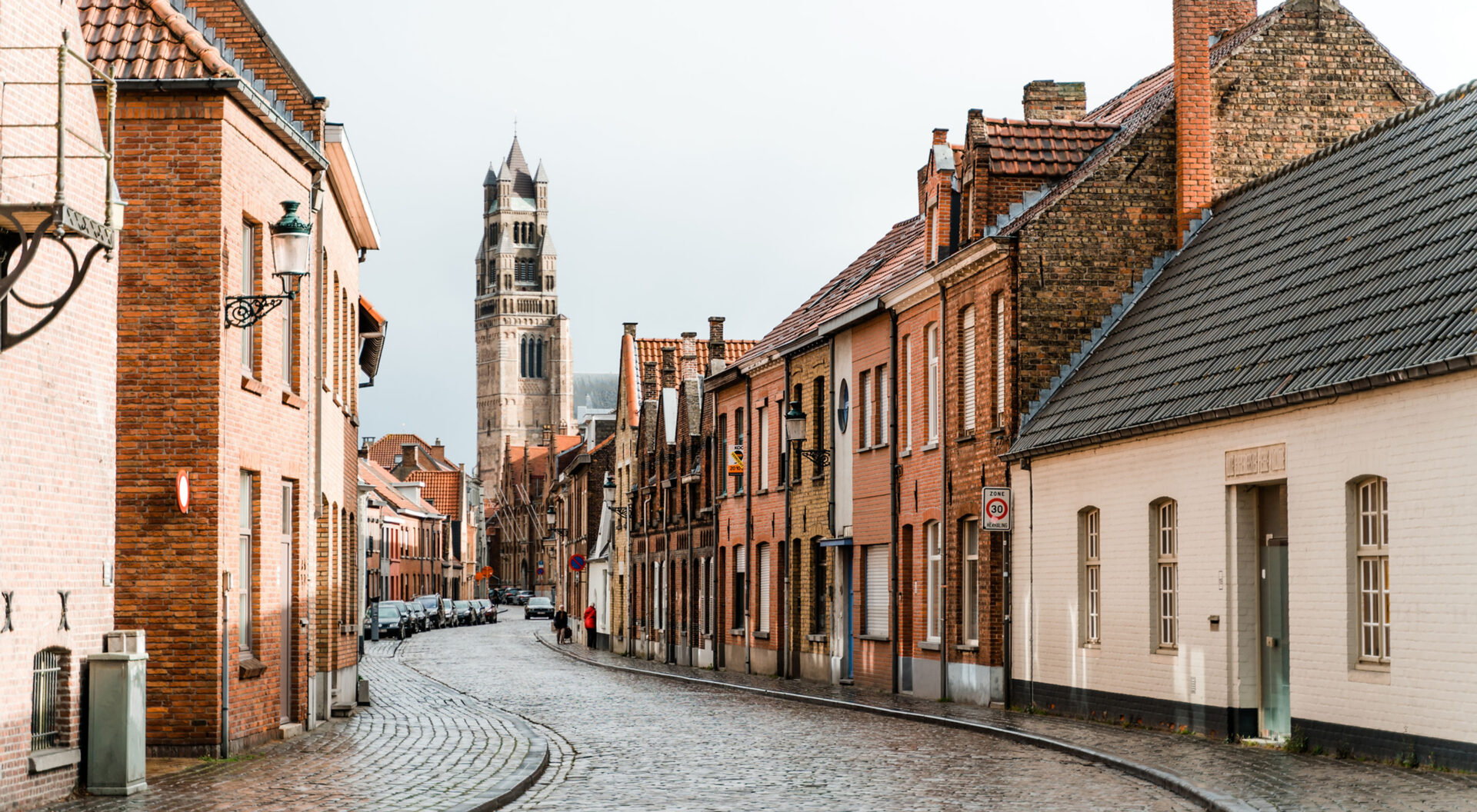
That recognition led to a summer school, first in Brussels, then Bruges, and now permanently based in Westhoffen, a village of 1,700 people in Alsace, where the association bought a 17th-century farm to convert into a school of architecture and craft. Students, aged between 16 and 65, spend weeks learning stone carving, carpentry, geometry and measured drawing, using mostly hand tools. The point isn’t nostalgia. It’s durability: a traditional building, built with local materials and the logic of its climate, lasts for centuries. Nadia set that against what she called “a mountain of waste”, buildings assembled from glued, toxic, unrecyclable materials with a lifespan of decades, whose demolition debris often ends up shipped to poorer countries to pollute rivers and ground there instead.
Somewhere between activism and pedagogy, the strategy shifted. “We cannot change the world,” Nadia said. “We can do things bit by bit.” So the school teaches as many students as it can, more than a hundred applications for different places each summer school, and opens its trainings not only to professionals but to ordinary people who want to restore their own homes without paying someone else to do it.
Resources: Sodas 2123
Gabija, events curator and coordinator at Sodas 2123 in Vilnius, described a different kind of infrastructure: a self-governed cultural centre operated by the Lithuanian Interdisciplinary Artists’ Association in a former school building owned by the municipality. Opened in 2020 after an open call for ideas on what to do with the abandoned site, it now houses more than 60 studios, rehearsal spaces for bands, film and visual arts organisations, a theatre, exhibition spaces, a bar, and an outdoor garden.
What makes it work, Gabija explained, is an exchange economy. Need a sound engineer for an event? There’s one with a studio down the corridor. Need a sound system? Borrow it from the same building instead of transporting one across the city. Residents pay symbolic rent and share utilities; the centre pays its own way through strategic three-year funding from the Lithuanian Council of Culture and the Vilnius municipality, plus space rental to outside events.
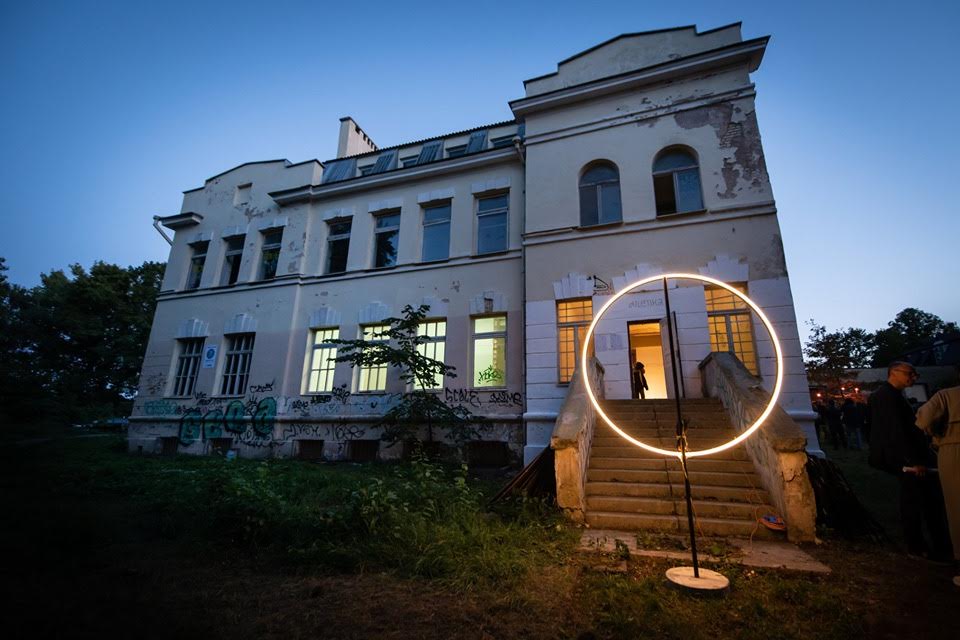
The centre’s public furniture tells its own story. When Vilnius demolished the old Trade Union Mansion in 2019, a building that had once housed more than 73 unions, associations and clubs, Sodas 2123 asked to keep some of its pillars, stairs and plinth. Its architects turned that vertical, hierarchical structure into horizontal benches scattered through the courtyard. “Basically that everybody’s welcome here, just to sit,” Gabija said.
The question nobody quite answered
Rachel closed the presentations with a question about what single change in policy, funding or public attitude would most strengthen community-based making across Europe. The answers didn’t converge. Nadia described a region, Alsace, where enthusiasm for traditional craft runs at every level, local, regional, national and European, to the point that funding hasn’t yet been the obstacle. Sole described the opposite: funders who simply don’t want to invest in spaces serving people on the move, whatever the quality of the work. Gabija pointed to something more structural still, a three-year strategic grant that finally let Sodas 2123 stop rewriting funding applications every year for every project.
Nobody tried to resolve the contradiction, and that felt right. The same call that opened with “making can become a common language” closed by admitting that language doesn’t reach every funder equally. What the three organisations share isn’t a formula. It’s a conviction that making with people, not for them, building trust before building objects, is worth doing regardless of which side of that funding line you’re on.
The next make-a-thek community call is already being planned. In the meantime, Habibi.Works, La Table Ronde de l’Architecture and Sodas 2123 are all open to visitors, volunteers and, in Westhoffen’s case, an open day on 19 July 2026, where students will show the school project they’re building, one measured drawing at a time.