
 Written by
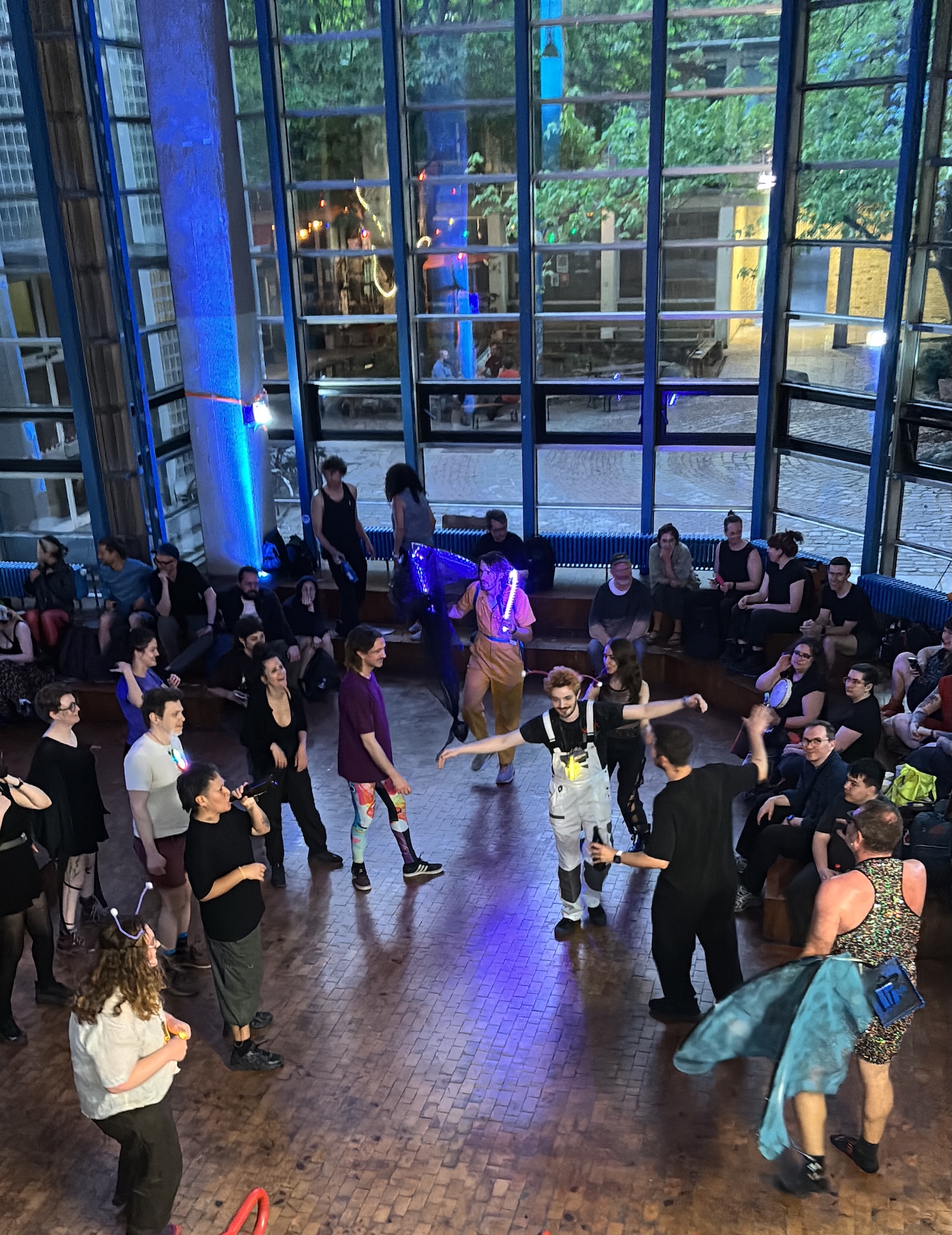
 The mathematics building of TU Berlin, May 23 and 24, 2026. A heat wave pushed temperatures to records, and inside the corridors of a concrete campus, several hundred people from dozens of countries gathered around circuit boards, knitting machines, flow batteries, and looms. For the first time in its history, the Open Hardware Summit came to Germany, and the Global Innovation Gathering came with it.
Since 2010, the Open Source Hardware Association has hosted the summit as the annual meeting point of the movement. This edition, organised with NODE Forum for Digital Arts, split the programme into a day of talks on Saturday and a day of workshops, discussions, and lightning talks on Sunday, with exhibition tables and an art gallery running across both. Around 240 proposals were submitted for the programme. The community had a lot to say.
For us at GIG, the timing was not a coincidence. The summit closed a stretch of days in Berlin that also included GIG Week 2026, gathered under the theme of Crisis-Resilient Community Innovation, and re:publica at STATION Berlin. Members of our network travelled from Asia, Africa, South America, and across Europe, and many of them stayed in the city to move from one event to the other. Berlin in May became a corridor of open technology and community practice.
Our participation at the summit was not a delegation with a booth and a banner. It was members of the network presenting, exhibiting, and discussing in the programme itself: Saad Chinoy from Singapore, Regina Sipos in Berlin, Jinger Zeng with the Seeed Studio team from Shenzhen, Enrico Bassi from Italy, and myself, coming from Maceió. Each brought a piece of the work our community does across territories.
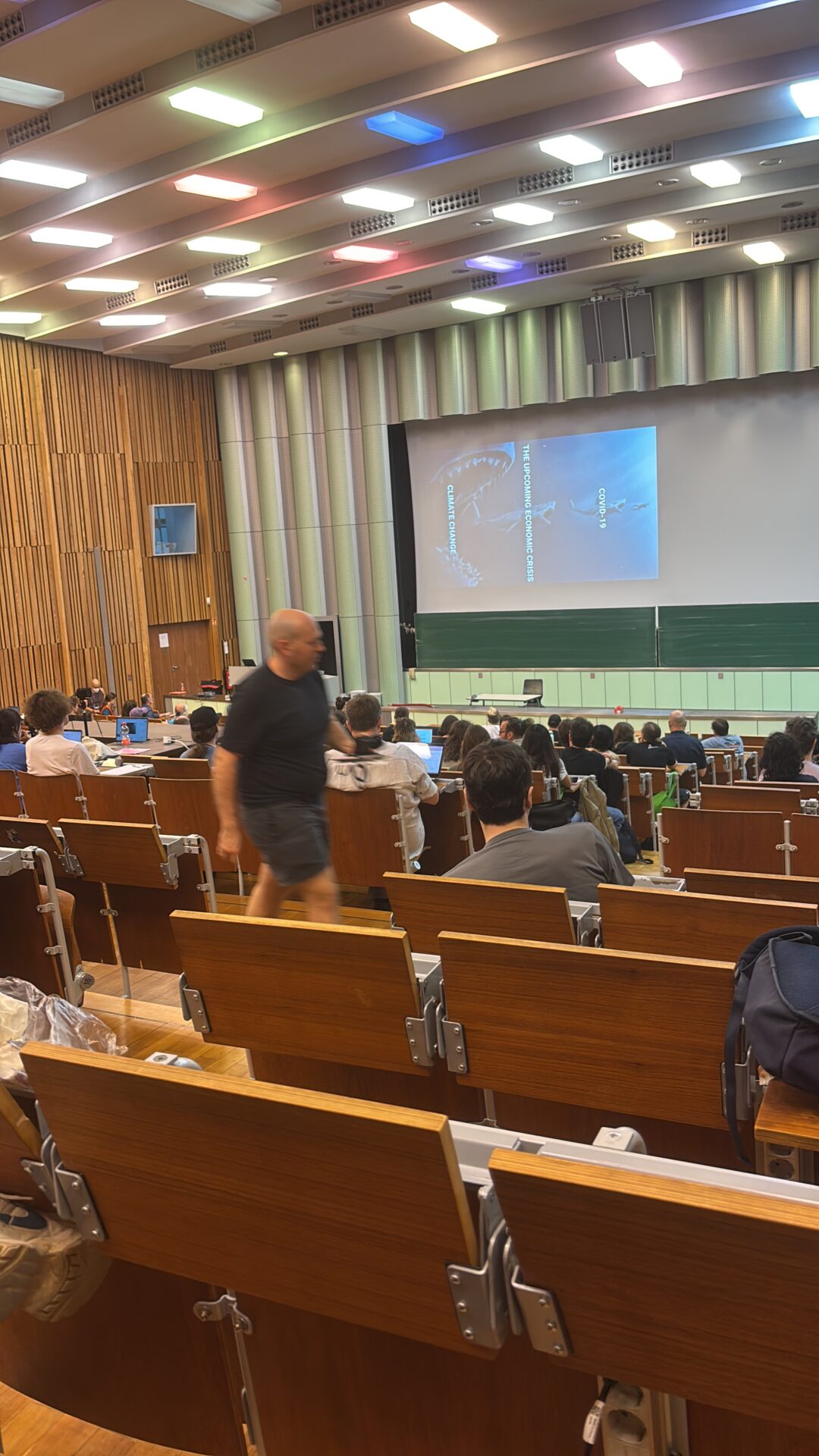
On Sunday afternoon, I joined the Discussions: Distributed Manufacturing session to present the panel “Distributed Roots, Global Fruits: Decolonizing Open Hardware for Sustainability with the Global Innovation Gathering.” The starting point was a question we carry in all our work: who gets to define what counts as innovation, and where is it allowed to happen?
The panel discussed how GIG leverages open hardware and grassroots makerspaces in the Global Majority to address challenges defined by the communities themselves, from environmental sensing to assistive technology to repair economies. Development does not need to flow from centralised labs in the North to recipients in the South. Makerspaces in Kisumu, Kathmandu, Oaxaca, and Olinda produce knowledge, tools, and standards of their own. Open hardware is the infrastructure that lets that knowledge circulate as commons rather than as property.
Sharing the session was Enrico Bassi, researcher at SUPSI and part of the LAUDS team, presenting why manufacturing needs to change and become open. LAUDS stands for Local, Accessible, Urban, Digital, Sustainable, a framework developed in an EU-funded project that gives city manufacturers tools for data sharing, participation, and value creation in their own territories. Enrico has led fab labs in Italy for years, and his argument lands close to ours: manufacturing is usually framed in economic terms, but it is a question of urban life and sustainability.
Putting the two presentations side by side in the same room produced the conversation we hoped for. A European project on urban production and a Global Majority network on distributed innovation arrive at the same conclusion from different directions: openness is not a licence choice, it is a redistribution of who can produce, repair, and decide.
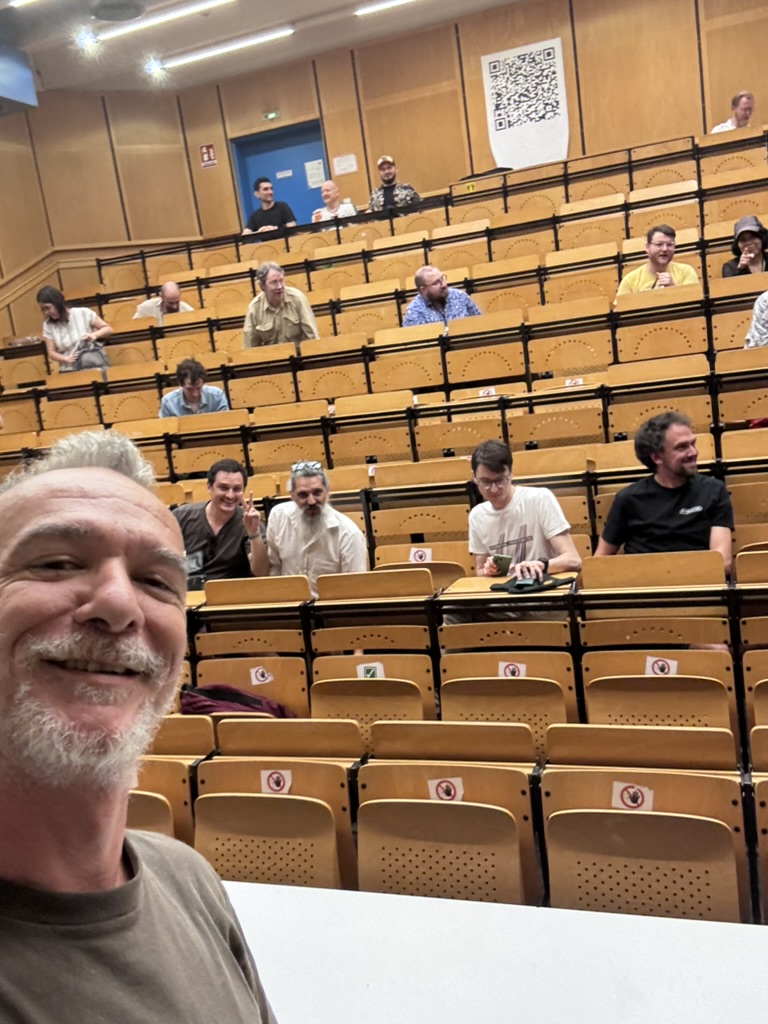
Earlier that Sunday, Saad Chinoy delivered a lightning talk titled “ReMaking with 3DPrinter parts.” His argument was material. As newer machines make older 3D printers seem obsolete, thousands of them head toward storage rooms and landfills. Because most of them are open hardware, they are not waste. Inside each one are stepper motors, bearings, rails, belts, rods, controllers, and switches, and projects like BrailleRAP, ReCreator, and Artme3D already turn those parts into tools that matter. Harvest, not discard.
Saad works from Singapore as maker at SpudnikLab and SalvageGarden, and serves as advisor to GIG and to r0g_agency. His practice sits where our network lives: frugal innovation, assistive technology, e-waste repurposing, and the patient work of adapting open designs like the BrailleRAP braille embosser for communities across Asia. A lightning talk lasts minutes; the practice behind it has run for years.
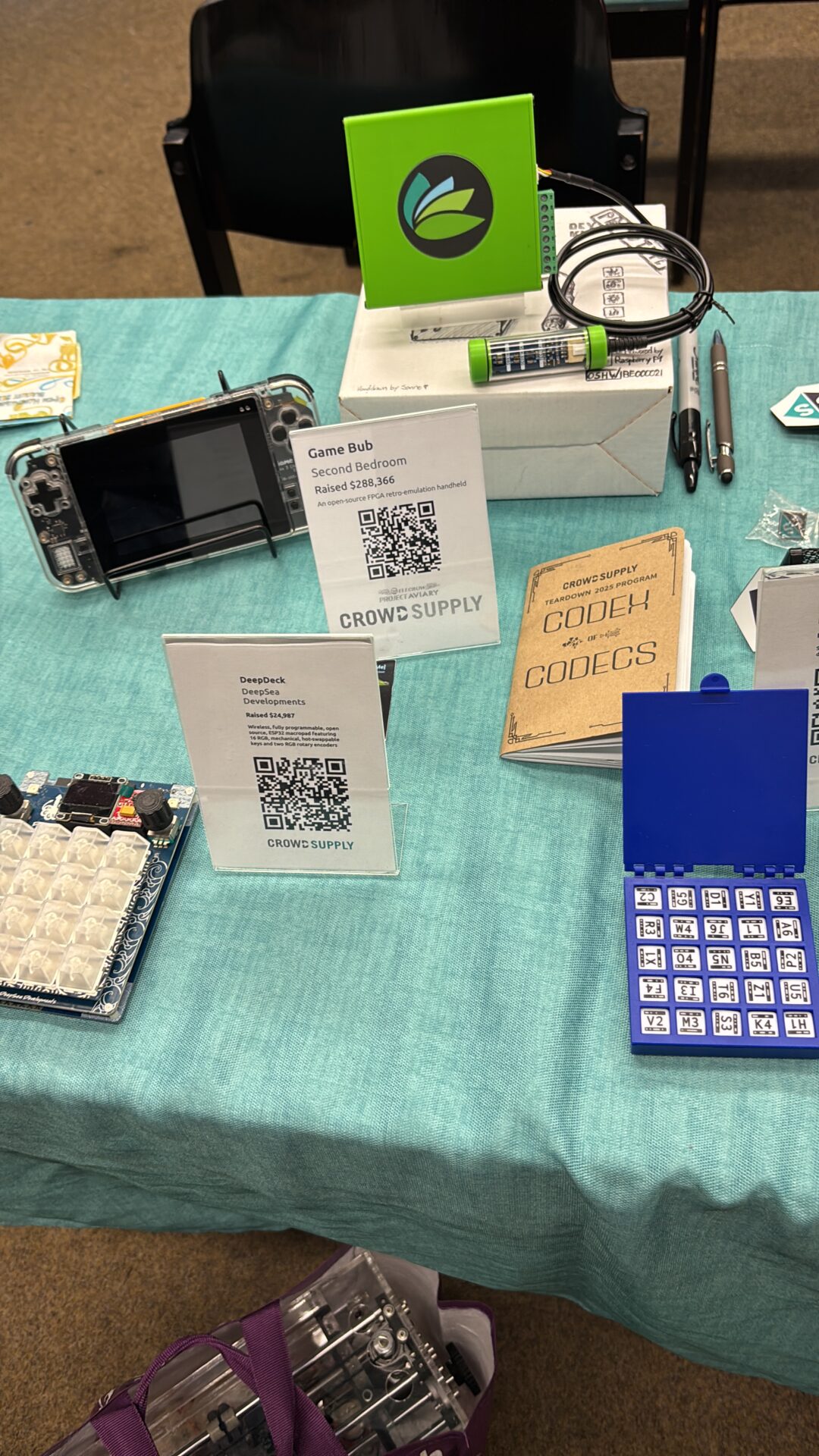
At the exhibition tables, Regina Sipos presented “Hacking Innovation Bias” together with Carolin Clausnitzer. The table showed artefacts built by students in their interdisciplinary seminar of the same name, using modular hardware from the Hacking Box. Instead of discussing bias in research and development in the abstract, the students translated data selection, interfaces, standards, and assumptions into objects that visitors could touch, test, and question, accompanied by demos and self-published zines.
There was a detail in that table that I keep thinking about: nothing on it was presented as a product. The exhibit framed everything as prototypes and working questions, open to interpretation and further hacking. Regina, a long-time member of our community and a researcher at TU Berlin, was in a sense hosting all of us, and her table modelled the pedagogy we want for technology: bias is not a footnote in the process, it is hardware you can hold.
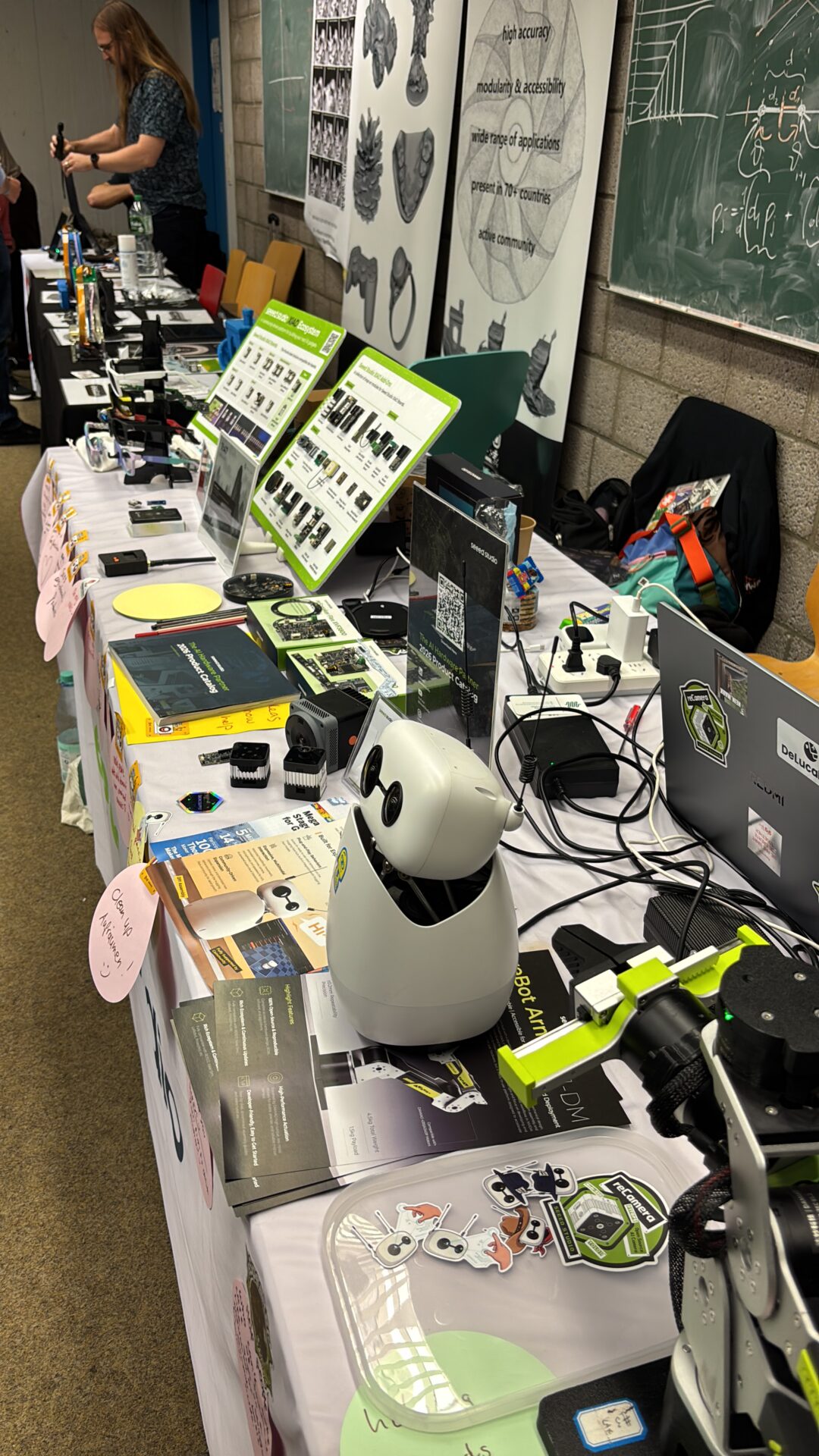
Seeed Studio, a recent partner of our network, held one of the tables that drew crowds through both days. The team showed in-house open hardware projects, from the reBot robot arm to the XIAO microcontroller ecosystem, alongside creations built on those platforms. Jinger Zeng and the Seeed field team had spent the days before at re:publica, where we co-created the makerspace area within the GIG community and ran a workshop on Meshtastic, an open-source platform for off-grid mesh communication over LoRa. The thread connecting the two venues was the same: hardware that communities can study, replicate, and govern.
GIG’s presence in the talks programme ran deeper still. On Saturday, Victoria Wenzelmann, co-founder of our network, and Timm Wille presented “Maker Emergency Kits” with Susan Long, and exhibited the project through the weekend. Building on what makers did during the pandemic, when workshops around the world produced protective equipment for their neighbourhoods, they proposed the Maker Resilience Kit, a preparedness-in-a-box that enables repair, knowledge sharing, and mesh replication of content between networked makerspaces. Resilience, in their proposal, is something you can pack, ship, and fork.
The summit also asked itself hard questions. Mitch Altman‘s talk “Where Goes Open Hardware?” examined a movement in which Qualcomm now owns Arduino and licensing disputes multiply. The answer that emerged across the two days did not come from any single stage. It came from the tables: braille embossers rebuilt from salvaged printers, batteries designed to be reproduced anywhere, student artefacts interrogating bias, mesh radios for places what the main grid forgets. The movement goes where its communities take it. All talks are available on the summit’s YouTube channel, and reflections continue under the #OHS2026 hashtag.
We left Berlin with new collaborations sketched on napkins and repositories already forked. From Santos to Singapore, from Shenzhen to Milan, the network showed what it is: distributed roots, global fruits. From here, we grow.