|
|
|
|
Welcome to March'26 Edition of GIGinsights!
|
March is buzzing with big news and bold momentum across our network! From welcoming GIG's newly appointed Supervisory Board members representing every corner of the globe, to gearing up for GIG Week 2026 in Berlin, our community is stepping into a season of renewal and change. We're growing ties with Ethiopia's innovation ecosystem through a study tour organised in partnership with SEQUA, and drawing fresh inspiration from circular design pioneers turning textile waste and tofu wastewater into innovative materials in our most recent make-a-thek community call.
Ready to meet the people and projects powering our network this March? Let's dive in! 🌍✨
|
|
|
|
|
|
|
|
General Updates From the GIG Community and Team Members 📰
|
|
|
|
|
|
|
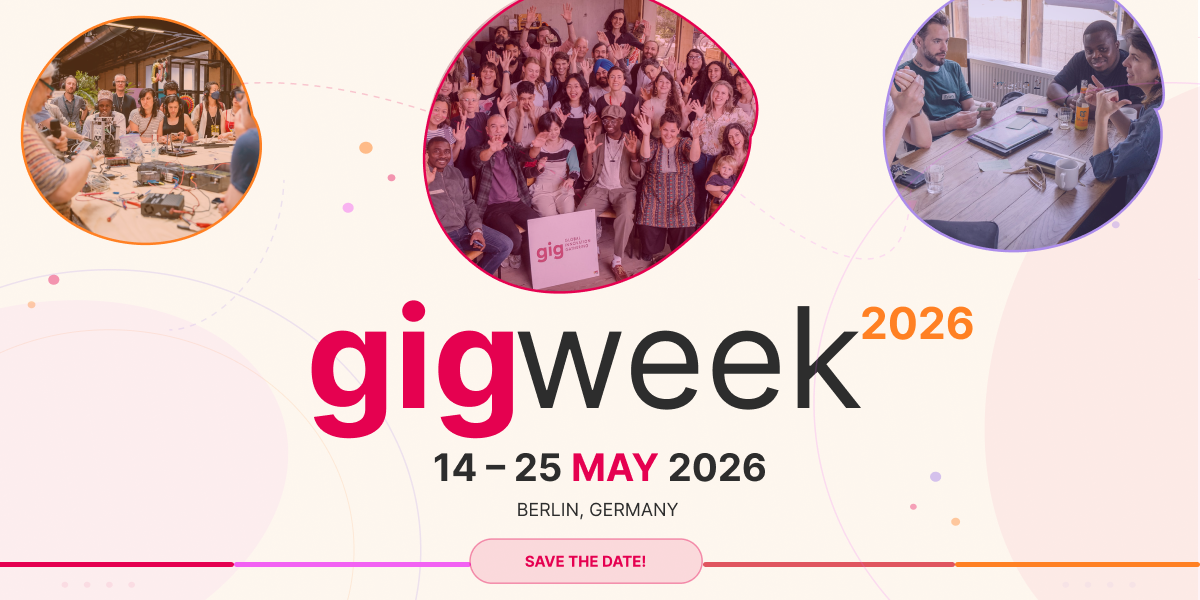
Get ready for GIG Week 2026!
This year we celebrate open innovation and global collaboration under the theme of Crisis Resilient Community Innovation. The week brings together GIG members from Africa, Asia, South America, and beyond for two community days of inspiration and learning, alongside partner events like re:publica and the Open Hardware Summit at TU Berlin. We invite you to connect with our global network of social innovators at the Makerspace at re:publica, featuring workshops and hands-on activities. GIG Week is by invitation only. Interested in attending? Reach out to us at [email protected].
|
|
|
GIG’s supervisory & exec board for 2026-2028
We are proud to announce our newly appointed Supervisory Board for the 2026 to 2027 term: Kersti Ruth Wissenbach, Rosanna Lopez, Pradita Pradhan, Susan Long, Eric Nitschke, Nadait Gebremedhen, Nawres Arif, Shaukatali, Emilio Velis, Omar Essafty, Martin Oloo, Lukas Loja, and Gabriela Agustini. These 13 GIG members from across the globe will help guide our long-term direction, safeguard our values, and support the growth of our network.
|
SEQUA partnership: Berlin study tour
In partnership with SEQUA, GIG is hosting a Berlin-based study tour with delegates from Ethiopia's vibrant innovation ecosystem, running alongside GIG Week this May. Earlier this month, we held an introductory meeting with delegates from various Ethiopian organisations, who shared how they are supporting the local social innovation sector and expressed enthusiasm for the upcoming tour. We also discussed opportunities for their participation at re:publica and the GIG Weekend, highlighting green tech, agriculture, and creative products as key focus areas. We look forward to hosting them this May!
|
Community call recap: Fashion circularity in Asia
Our first make-a-thek community call of 2026 brought together two inspiring practitioners redefining waste and circular design. GIG member, Irene Agrivina, from XXLab shared how she transforms tofu wastewater into biomaterial textiles in Indonesia, while Xiaoli Ding from RESOON presented digitally driven infrastructure tackling China's 26 million tons of annual textile waste. From pedal-powered sewing machines in South Sudan to open-source fermentation recipes empowering rural women, the call highlighted how communities designing around their own realities produce the most inventive solutions.
|
|
|
|
|
GIG Members' Project Highlights ✨
|
|
Chad Innovation Hub, Chad
|
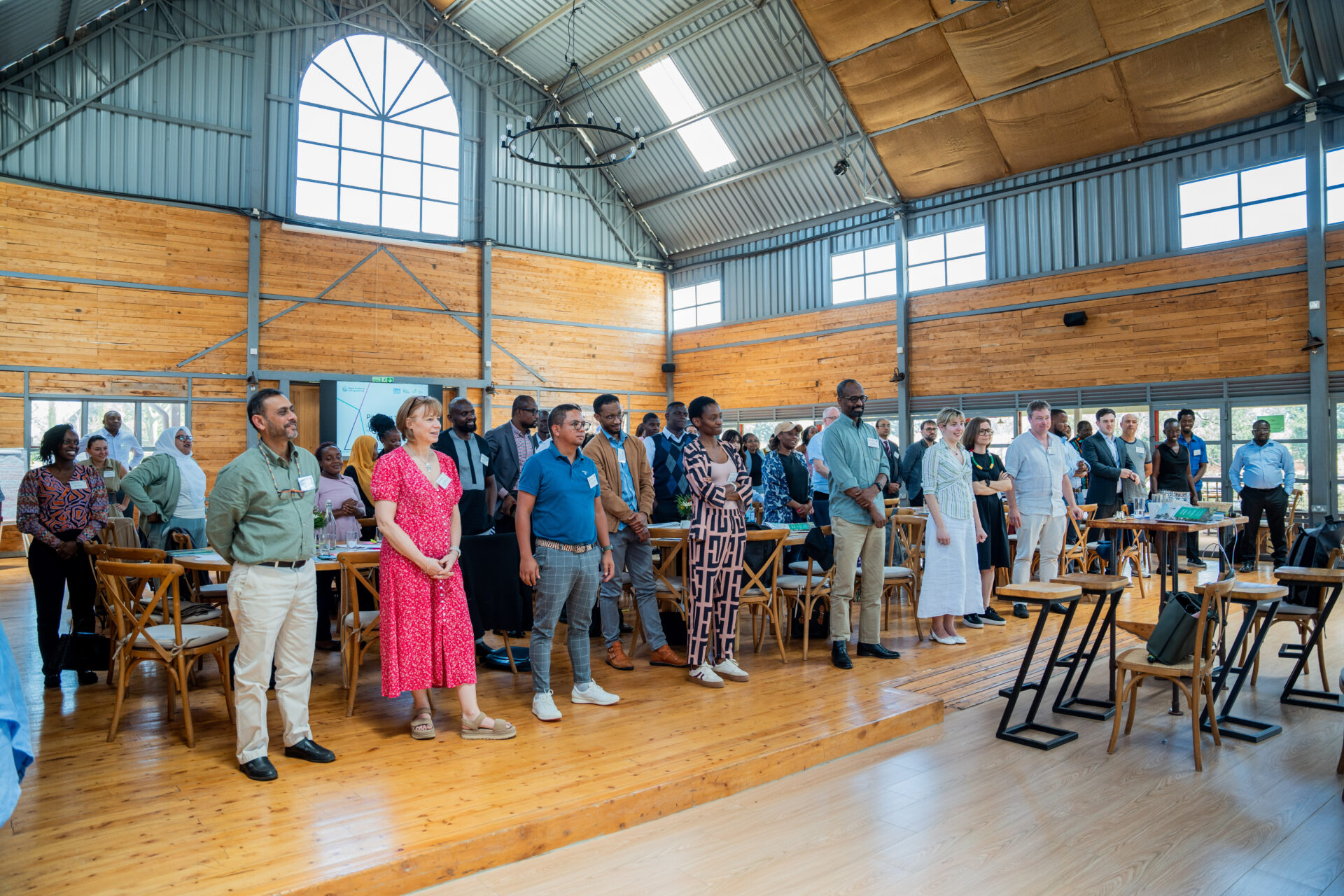
In February, GIG members, Hamid Khayar, from Chad Innovation Hub and Andrew Lamb attended the Green Skills Symposium in Nairobi, Kenya. Convened by the Royal Academy of Engineering alongside UNEP and partner organisations, the event brought together engineers, policymakers, and innovation leaders to explore green skills for a just, low carbon transition. The Hub contributed insights from decentralised energy projects in underserved communities, with sessions on informal economies and flexible certification proving especially relevant to their work expanding access to quality technical services in Chad.
|
|
|
The Pranava Institute, India
|
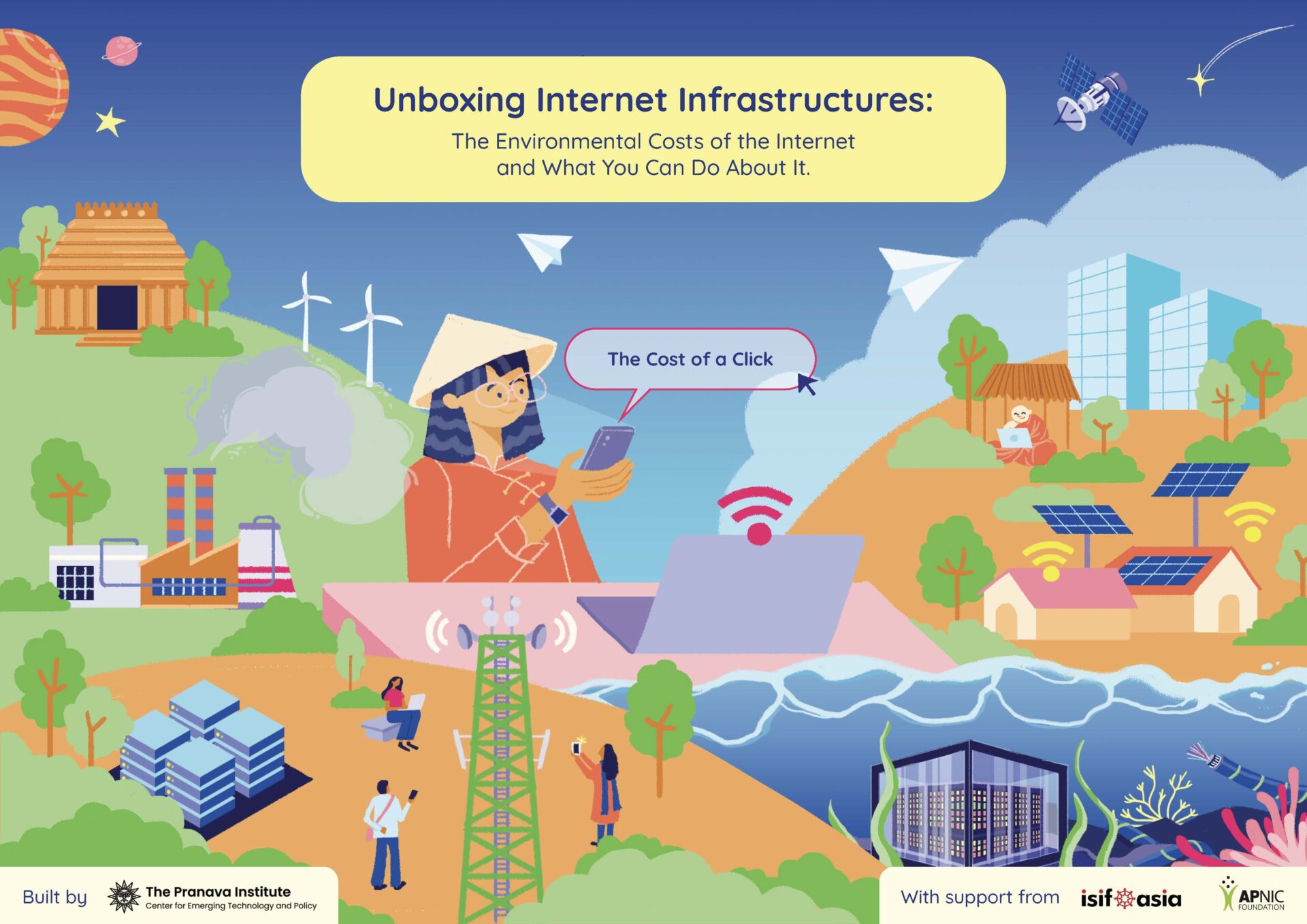
Dhanyashri, GIG member and Governance Lead at The Pranava Institute, shares the launch of a new module from the Institute's Unboxing Tech Toolkit Series. Titled Unboxing Internet Infrastructures: The Environmental Costs of The Internet and What You Can Do About It, the resource unpacks the environmental costs of the internet for young, non-technical audiences. Accompanied by facilitator guides and blogs, the module is available in multiple languages including Hindi, Tamil, Kannada, Khmer, Filipino, and German, making it broadly accessible to communities across regions!
|
|
|
|
|
|
|
|
|
Special dedication: newly nominated members 🌍
|
|
We're delighted to introduce our newest members, each bringing a shared commitment to our mission, as they join our global community this year. Please join us in welcoming them!
|
|
|
|
|
|
|
|
|
|
|
|
|
Events:
A conference focused on open source supply chains, compliance, and collaboration. It gathers industry, legal, and community stakeholders working on sustainable open source governance and standards.
|
A leading climate tech and sustainability startup event connecting founders, investors, and corporates. Strong focus on open innovation in energy, mobility, and circular economy solutions.
|
This long-running community event is a volunteer-organised open source and Linux conference with a strong education focus. It features talks, workshops, and meetups across free and open source software topics for enthusiasts, professionals, and newcomers alike.
|
The world's largest gathering for planetary solutions, bringing together approximately 40,000 participants. It features over 1,000 innovative solutions, exhibitions, and conferences that connect innovators, investors, companies, and cities committed to environmental and social impact..
|
This gathering brings together movements and anti-capitalist activists resisting big tech and digital capitalism. It focuses on connecting local struggles, deepening political analysis, and exchanging ideas on effective forms of action.
|
Opportunities:
|
This regional call seeks multi-country consortia to develop innovations in agri-food systems that are more productive, competitive, and environmentally sustainable. It prioritises technologies with strong adoption potential and regional impact across Latin America and the Caribbean.
|
|
This fund supports independent developers, researchers, activists, and small organisations working on free and open-source technologies that strengthen the internet as a public good. It funds projects across the stack - from open hardware and infrastructure to applications and digital commons.
|
|
This funding opportunity invites SMEs, cooperatives, social enterprises, NGOs, and public/private entities to strengthen smallholder livelihoods and promote sustainable value chains. It prioritises projects in Least Developed Countries, Small Island Developing States, and the Congo Basin.
|
|
Organised by the Austrian Development Agency, this call funds partnerships between private sector actors and NGOs to deliver inclusive economic development. It prioritises innovation, strong collaboration, and sustainable development impact aligned with SDG 8 and SDG 9.
|
|
This Internet Society Foundation grant supports projects that strengthen internet infrastructure and peering ecosystems. It is particularly relevant for open infrastructure, community internet, and public-interest connectivity initiatives led by nonprofits and technical communities.
|
|
This annual program recognises implemented and piloted initiatives that combine design, technology, and civic engagement. The 2026 theme, Collective Action for Regenerative Urban Futures, supports projects advancing local production, circular economies, and urban resilience. Winners receive funding, mentoring, lab access, and a ticket to present at Fab26 in Boston.
|
|
|
|
|
|
Knowledge Highlights 📰
|
For everyone interested in the potential of AI in addressing climate change, this exciting podcast by LinkingDebate is for you! It explores how AI differs from earlier digital platforms by requiring substantially more computation, energy, and water - and why claims that AI will solve climate change may be more illusion than reality.
|
|
In this article for Inkota Network, Geraldine de Bastion, GIG founder, sheds light on AI's hidden workforce. While profits concentrate in a handful of tech companies, the costs, such as traumatic data labelling, environmental damage, and energy consumption, fall disproportionately on the Global South. How can AI be treated as critical public infrastructure, with greater investment in local languages, skills, and sovereignty?
|
|
|
|
|
|
|
Support GIG 🎯
|
We invite you to join us in driving innovation for social impact worldwide as a supporting member.
|
Why Support GIG? 🤝
- Drive long-term growth and sustainability for a global network of innovators.
- Promote inclusive, sustainable innovation through knowledge exchange and learning.
- Advance open hardware research and distributed manufacturing.
- Strengthen grassroots climate resilience efforts worldwide.
Ways to Support 🌟
Here are the suggested annual contributions:
Small Organisations: €300
|
|
For organisations with fewer than 50 employees or under €1 million budget
|
Large Organisations: €3,000+
|
For organisations with 50+ employees or €1 million+ budget
|
Contribute now or contact us to learn how your support can help social innovators create lasting change in communities worldwide.
|
|
|
|
|
|
👀 Stay tuned for more exciting updates next month! 💌
|
|
|
|
|
|
|