
OWRA: Organic Waste Recycling in Aba
Grassroots platform for practical alternatives to open waste burning.

Organic Waste Recycling in Aba (OWRA) is a grassroots innovation platform where young people, artisans and community members find practical alternatives to the open burning of leather and textile waste in Aba, Nigeria.
Aba is a major leather and garment hub, home to 80,000+ leather artisans and 50,000+ tailors, whose work generates large amounts of waste every day. Without the infrastructure to collect, recycle or safely dispose of it, scraps are often burnt around production areas, releasing harmful gases and worsening air pollution and health risks for nearby neighbourhoods. The project offers practical, affordable and locally relevant alternatives that make Aba’s production areas cleaner, healthier and more liveable.
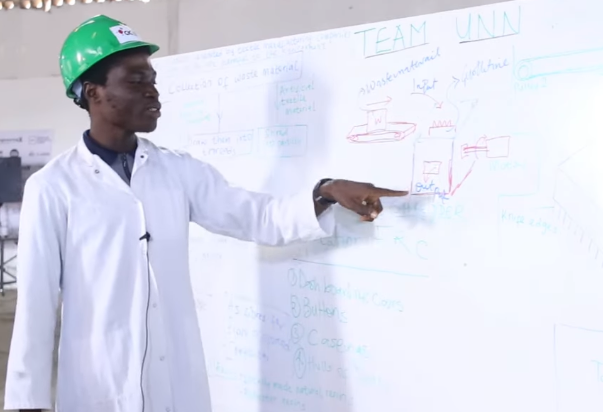
Local makers and innovators first develop ideas and skills for reducing waste; teams then create low-cost waste-to-product prototypes that show the economic value of waste and create local income; and the project finally pilots community collection points and rewards, a new layer of neighbourhood infrastructure that encourages responsible disposal. Residents help design, test and improve every stage, with a say in how waste is managed on their doorstep. OWRA is driven by a vision of Nigeria as a producer of technology and a mission to build the country’s capacity in innovation and manufacturing.
At a glance
Grant tier
Micro Grant · USD 5,000
Project lead
Location
Aba, Abia State, Nigeria
Partner
Topic
Circular economy
Turning leather waste into local opportunity.
OWRA is at the early prototyping stage, with few waste-focused prototypes to build on. During the grant, the team will develop and test solutions, then pilot collection models and incentives. The biggest challenge is changing habits, since artisans have long burnt waste in the open. The project also needs low-cost products and collection points suited to Aba's informal production settings.
The team aims to have at least two local solutions and a pilot in three areas, leading to a 70% drop in open burning, an accompanying rise in adoption of safer alternatives in the communities, and at least five new income opportunities from waste-based products and a collection system residents help run.
Keen to collaborate?

About the GIG Fund
The GIG Fund supports grassroots innovators building resilient, inclusive, and adaptive urban areas, with funding, mentorship, and a community of practice. It was created in partnership with the Judith Neilson Foundation, and the 2026 grantees were announced on 11 June 2026.
