 Written by
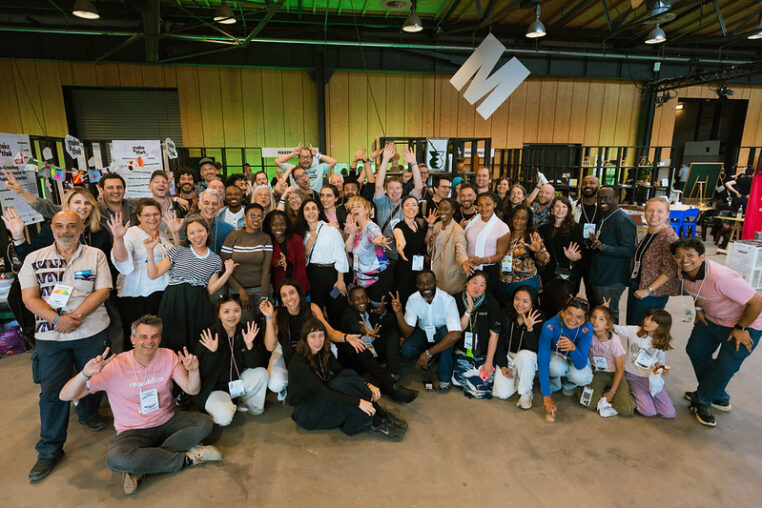
 This year, re:publica’s motto “Never Gonna Give You Up” centered on resilience, solidarity, and fighting for a better future amidst ongoing global and technological crises. At a moment when democratic values, open knowledge, and community infrastructure all face serious pressure, the Makerspace was a dynamic interface on the ground connecting these critical topics. Curated for the 13th year by GIG, it is more than an exhibition area. It is where people of all ages and backgrounds shift from passive consumers to empowered makers, getting their hands dirty with open-source hardware, citizen science, skill-sharing, and community-led innovation. The goal is simple: make complex ideas tangible, introduce new ways of thinking about technology, and build connections that outlast the conference itself.
Local-global workshops at the Makerspace
Makers and workshop facilitators arrived from over 20 countries, from Bogota to Singapore, from South Sudan to Berlin. The differences in perspective, culture, and lived experience were felt in every session. Over three days, more than 20 workshops ranged from mesh network building and biomaterials to textile repair, zine-making, and emergency alert device prototyping, drawing in participants who would not necessarily identify as makers at all. That diversity was one of the week’s greatest strengths. Together, the workshops kept returning to the same underlying questions: what is technology actually for, and who gets to decide how it is built?
The Makerspace opened with makers from Asia, Latin America, and Africa walking participants through three real-world scenarios using open hardware sensors: air pollution monitoring, water scarcity response, and deforestation detection, each grounded in how communities in the Global Majority have actually deployed these tools.
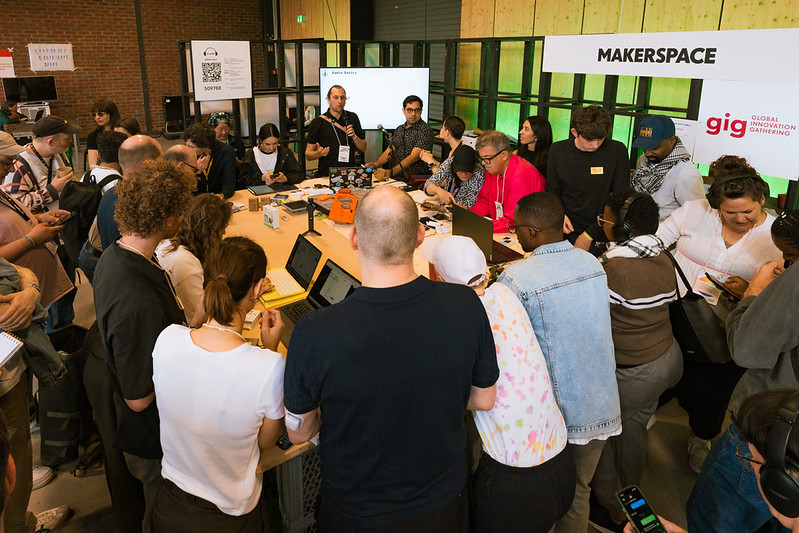
Workshops also addressed resilience from multiple angles. The Distributed BioLabs session moved fast from theory to practice, with participants making biocomposites from simple ingredients and exploring bio-based production as a systemic alternative to extractive manufacturing. Seeed Studio’s Jinger Zeng and Robert Bogs built a functioning off-grid mesh network live with participants, demonstrating how decentralised communication holds together in exactly the environments where centralised infrastructure fails. Bilal Ghalib and Abinav Dey led a bio-resource mapping session, co-creating a satellite-enabled local knowledge library that connected maker culture with biodiversity, traditional land use, and community heritage. The Pluriversal Care Zine workshop, led by Kersti Ruth Wissenbach with Felipe Schmidt Fonseca and Estela Ribeiro, used Arturo Escobar’s concept of the pluriverse to hold contradictions in place rather than resolve them. The zines participants produced were not conclusions. They were working documents.
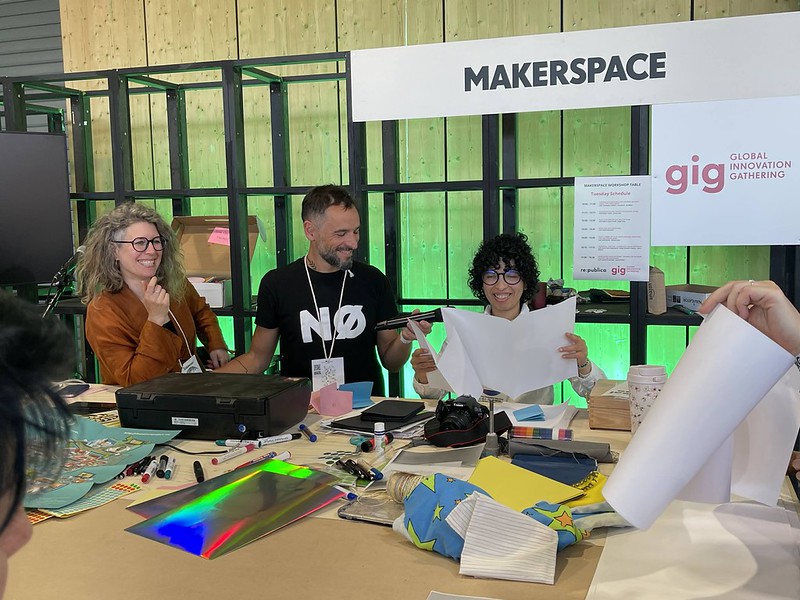
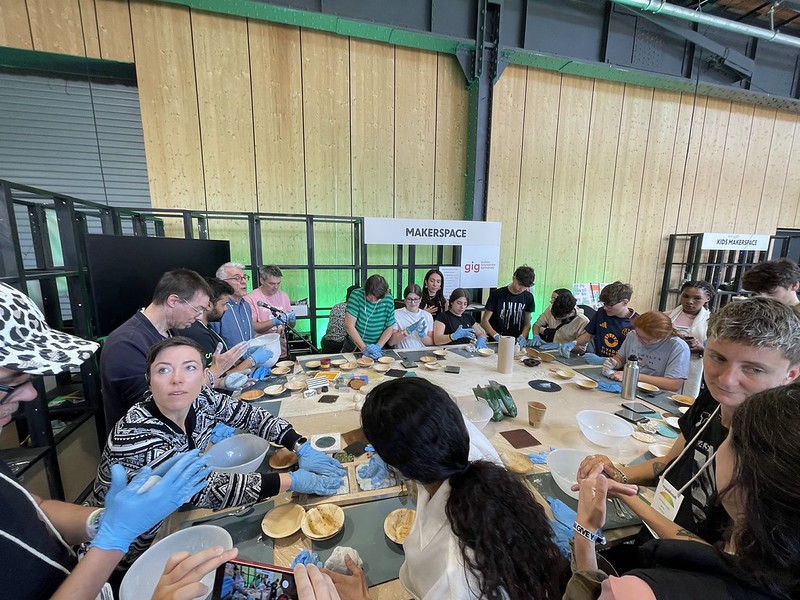
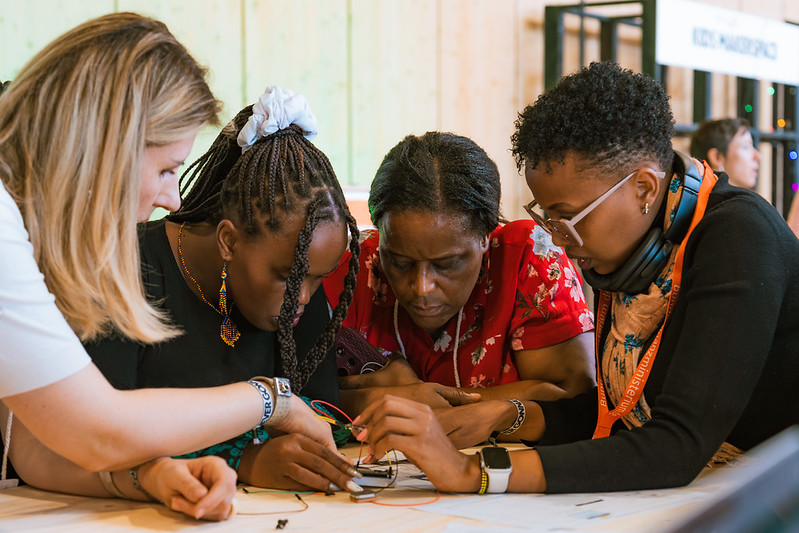
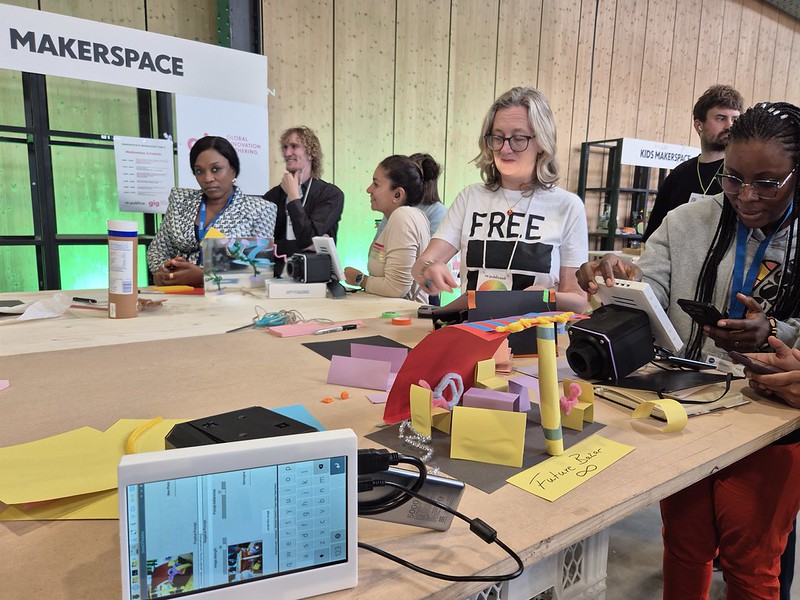
Across the full range of what critical making can mean, Kersti led a workshop on radical citizen science and the PermaFuturos methodology, drawing on examples from rural Spain to map climate resilience as interconnected, systemic challenges rather than isolated fixes. Saad Chinoy, Regina Sipos, and Daniel Wessolek used paper prototyping and the Kodascope, a Raspberry Pi-based open hardware AI camera, to explore what recent paradigm shifts in design research mean for technology development through participant-defined prompting. Then came the session everyone kept talking about afterward. Epifania Wilbard and Witness Shangali from Twende Hub in Tanzania led participants through designing and prototyping a portable safety alert device for female students, using an ESP32 microcontroller and GSM modules to send location-based emergency SMS alerts in low-connectivity environments.
Beyond the workshops: Installations, Exhibitions, and the Space Between
Workshops were only part of the picture. The Makerspace was equally shaped by its installations, exhibitions, and the conversations that formed spontaneously at tables, over coffee, and in front of things that made you stop and look twice.
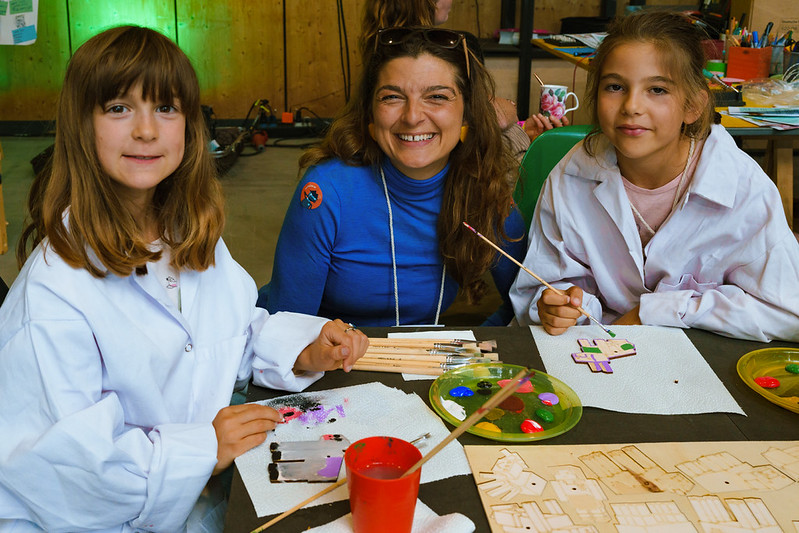
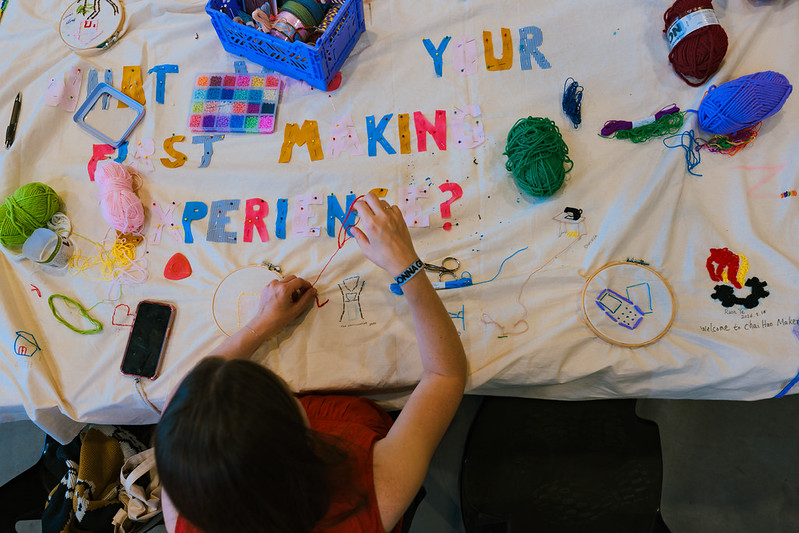
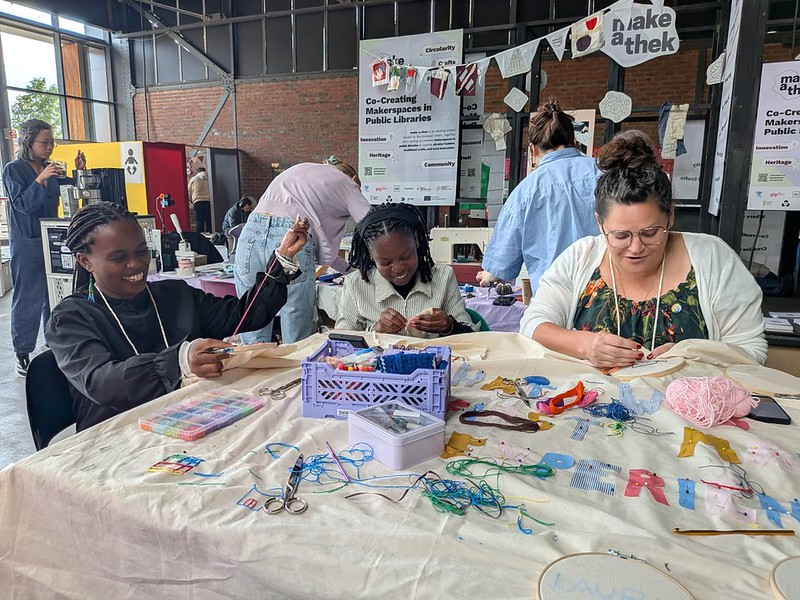
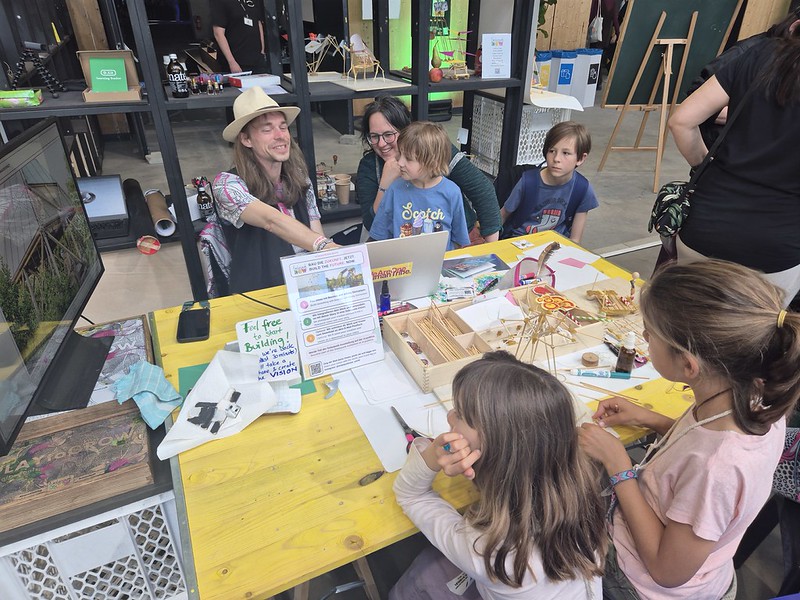
The Kids Maker Corner was one of the liveliest corners of the entire festival, and not just for children. Participants dismantled broken toys and rebuilt them, learning how things work while developing the instinct to fix rather than discard. Similarly, the make-a-thek Textile Bar ran as a living demonstration of circular fashion across all three days. Retired event fabric, hotel linen, and household textiles were washed, mended, naturally dyed, and transformed into new items in front of visitors. People brought their own fabric and took part in the full collect, care, create, and circulate loop. Jessica Guy’s shared textile installation, asking visitors “What was your first making experience?”, grew through contributions from makers across the world and continues to travel.
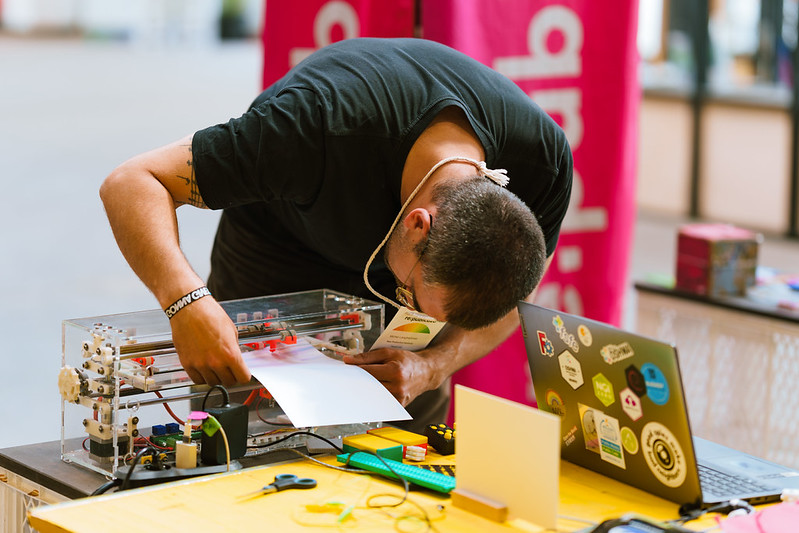
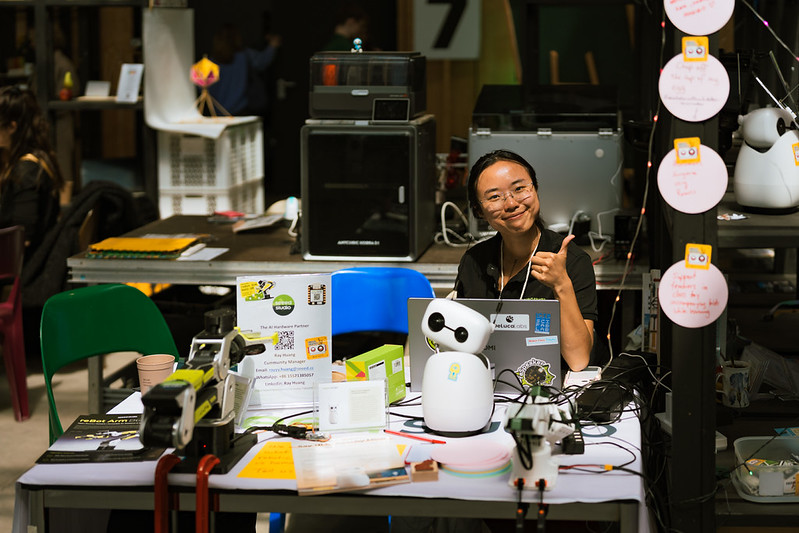
The exhibition area brought together open source tools and prototypes from various partners. At the Seeed Studio booth, visitors could explore the reBot arm, reCamera, the XIAO family, and a range of displays showcasing what accessible hardware development looks like in practice. Other highlights included BrailleRAP, an open source Braille embosser capable of producing geographic maps and drawings as well as documents; RecycleBot, which turns household plastic waste into 3D printer feedstock; and Making Things Public(ly) by the New Production Institute, a collection of artefacts from makerspaces worldwide that frames making as an exploratory practice rather than a path to a finished product. And then there was Error 418, a recreation of the world’s first webcam, originally a coffee pot monitor built by two computer scientists before the web existed, recreated here with real coffee as a prompt for conversation about where all of this began and where it might be going.
Additionally, this year’s Makerspace featured a pop-up Workshop Table that ran short rotating sessions throughout the three days. This included TU Berlin’s workshops on circular composting, democratised wind energy, and DIY running shoes, and SolarPunk NOW’s hybrid prototyping jam, where participants sketched regenerative futures on reusable Infinity Stonepaper and building rapid physical models of compost systems and urban energy harvesters.
What the maker community took away
The insights from the week didn’t come from a single session. They accumulated, contradicted each other, and gradually sharpened into something worth sitting with.
The Tanzanian delegation, which GIG hosted as part of a Berlin innovation ecosystem tour, brought together representatives from Twende Innovates and Tengeru Institute. They described the week as reaffirming the importance of cross-sector collaboration in advancing inclusive digital innovation, and underscored the growing role of Tanzanian innovators and young changemakers within the global technology landscape. The safety alert device workshop they hosted was a clear example of something several participants and partners had been circling around: that local manufacturing is not an abstraction. It is a specific tool, built by and for a specific community, designed to work within real constraints. For Hamid Khayar Oumar from Chad Innovation Hub, the experience was equally concrete. The Makerspace offered new perspectives, stronger international connections, and space to reflect on how global conversations can directly fuel innovation back home. Global gatherings, he has said, only matter if they change what happens locally.
For Seeed Studio, the week confirmed something central to their mission: that digital resilience isn’t just about hardware, it’s about empowering people to build and own their connections. They watched that come alive at a table of 30 participants building their first mesh networks, and in a session where female makers soldered their own DIY nodes from scratch. The Seeed Studio team left Berlin inspired by the creativity of every maker who sat down with them to dismantle, tinker, and experiment.
On AI, GIG member Salih Mahmood offered one of the week’s sharpest reframes through his workshop AI Around Us. The argument was simple: AI did not suddenly appear. It has existed around us for years. The real challenge now is not access but literacy, knowing how to use these tools critically, ethically, and strategically in a world where AI is already reshaping labour markets, energy consumption, and global power dynamics.
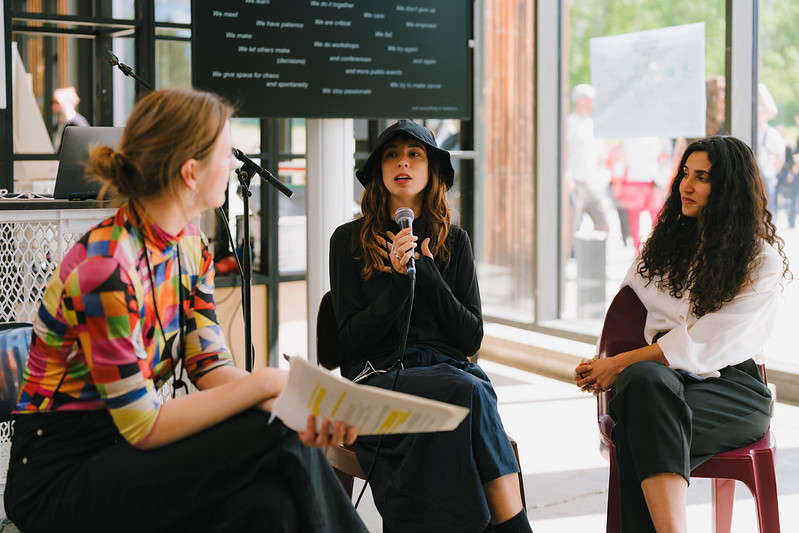
Last but not least, the deeper thread running underneath our activities at the Makerspace was the question of what distinguishes a network from a community, and why that distinction matters more now than ever. It was Fadia Elgharib, GIG’s Community Manager, who put it most plainly in the panel From Maker Faires to Social Infrastructures: “If I leave, will the community survive?” At GIG, we continue to explore how global networks give reach, and how local communities give value.
A big thank you to our partners
None of this would have been possible without the support of the Berlin State Office for Development Cooperation, SEQUA, Seeed Studio, and the make-a-thek project, alongside every maker, workshop facilitator, and curious visitor who showed up and contributed.
If your organisation shares our mission for community-driven innovation and wants to help shape what comes next, we would love to hear from you. Reach out and co-create the next edition of the Makerspace in 2027 with us.
Stay curious. Keep making. And thank you for being part of re:publica 2026!