
 Written by
Have you ever had an idea to solve a problem, but wondered whether you had the means to make it happen? Innovation doesn’t belong only to those with advanced technology and deep resources. It begins when people recognise a challenge in their own community and decide to tackle it together. Supported by the Judith Neilson Foundation, the first-ever GIG Fund backs projects like these, from their early stages through to scaling, with mentorship and funding. The aim is for sustainable local solutions to grow and for urban communities to become more resilient, inclusive and adaptive. From plastic waste turned into urban furniture in Brazil to solar-powered neonatal incubators in Ghana, this year’s grantees are building practical, locally grounded answers to the problems they know best. We’re delighted to share their stories with you.
Let’s start with waste. It’s a global challenge, but it lands hardest on communities with limited access to recycling infrastructure. Of the more than 2.5 billion tonnes of waste generated worldwide, only a fraction is recycled. Much of it goes uncollected, gets burned or ends up in open dumpsites. A mostly linear economy plays a major part in this: resources are extracted, used and discarded. In a circular economy works differently, keeping materials in use for as long as possible by reusing, repairing and recycling them. Several GIG Fund projects are taking this on, moving their urban communities towards more sustainable waste management.
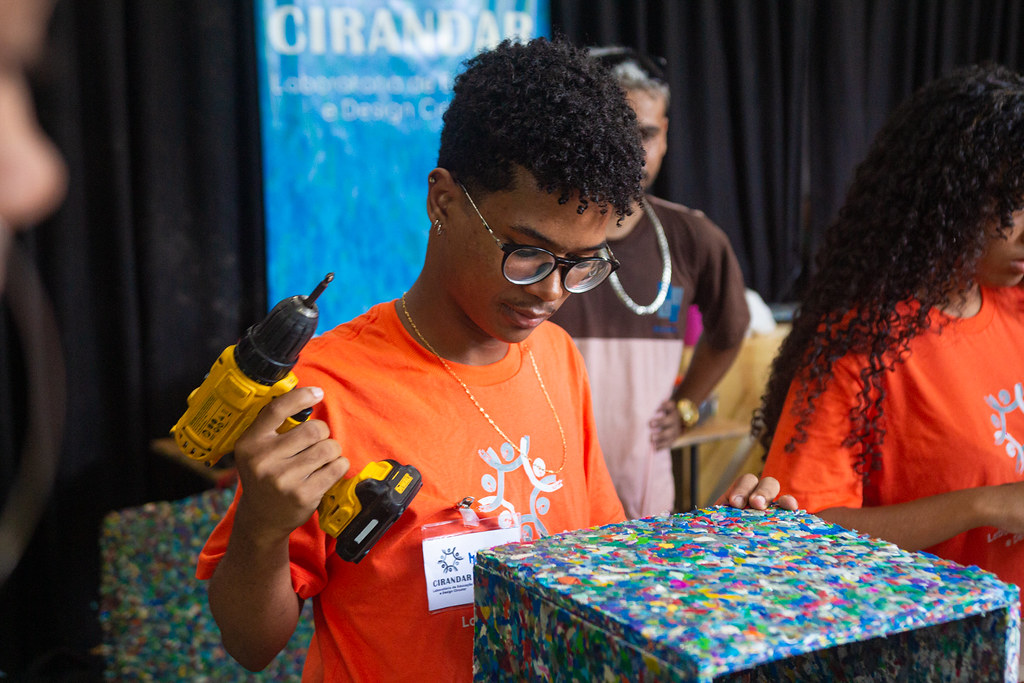
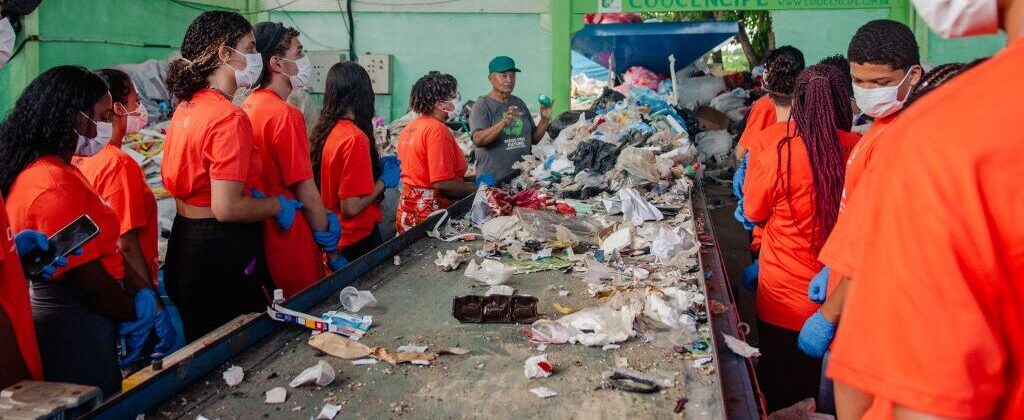
In Olinda, Brazil, the Circular Education and Design Laboratory (CIRANDAR) is turning plastic waste into useful products to cut plastic pollution in local oceans and rivers. The CIRANDAR team shares the knowledge and tools so that neighbours can turn plastic waste into community infrastructure, like urban furniture. We love how CIRANDAR shows waste coming back into a community as something useful, linking recycling, education, community participation and employment. In Olinda, this means residents can rely less on industrial recycling facilities and take a more active role in managing plastic pollution on their own doorstep.

Similarly, in Aba, Nigeria, the Organic Waste Recycling (OWRA) project brings community members together to address the open burning of textile waste and work towards a circular economy. Aba is a major leather and garment hub, home to more than 80,000 leather artisans and tailors whose work generates large amounts of waste every day. Without the infrastructure to recycle or safely dispose of it, scraps are often burnt, releasing harmful gases and worsening air pollution and health risks for nearby neighbourhoods. The project’s team is piloting a community-led waste management programme that works to address these issues. Community members first develop ideas and skills for reducing waste and create low-cost waste-to-product prototypes with the potential to generate local income. The project then pilots community collection points and rewards, a new layer of neighbourhood infrastructure that encourages responsible disposal. Because community participation is essential to its success and sustainability, the project also creates job opportunities.
While many might understand the circular economy as key to addressing resource scarcity and climate goals, there is still the need for accessible reliable tools so that local communities can put sustainable waste management into practice. Thread-Sense V1 is a handheld, non-destructive textile classifier that uses near-infrared (NIR) spectroscopy to identify textiles. The project’s team, based in Singapore and Southeast Asia, is making manual identification and sorting of textile fibres easier, with a tool that is efficient, accurate, affordable and replicable. Once classified, textiles can be directed into the right recycling streams, re-entering the economy as new resources and making existing circular systems more effective.
Together, these projects take on different corners of the waste system and show that, with the right processes, tools and a collective mindset, waste can be recycled and reused as a resource for a less polluted urban environment. But no single infrastructure or innovation will make our economy more circular: it takes adapting to a community’s unique challenges, economic needs and local materials, and that is exactly what these GIG Fund projects are doing.
Clean Energy Access is another theme running through many GIG Fund projects, and it starts from a simple truth for urban areas: healthcare, education and working environments all depend on reliable energy. Where electrical infrastructure can’t be counted on, essential processes are interrupted, which is why decentralised renewable solutions like solar matter so much. Solar lets communities generate, store and consume electricity or heat locally, instead of relying on large power plants and long-distance high-voltage transmission lines.
In Tamale, Ghana, the SolarCare project is developing a low-cost, solar-powered incubator designed to keep vulnerable babies in a stable, safe environment. In the city, electricity is unreliable, running costs are high and essential newborn equipment is hard to get, which often leaves local health services under strain. By combining solar energy, temperature and humidity monitoring, and controlled heating with light therapy (phototherapy), the project aims to better equip smaller hospitals and maternity clinics with dependable technology for premature and low-birth-weight newborns who need consistent warmth, and for babies with neonatal jaundice who need phototherapy. The SolarCare team is developing and testing a working prototype that adapts the device to local healthcare needs and builds skills for future maintenance and upgrades.
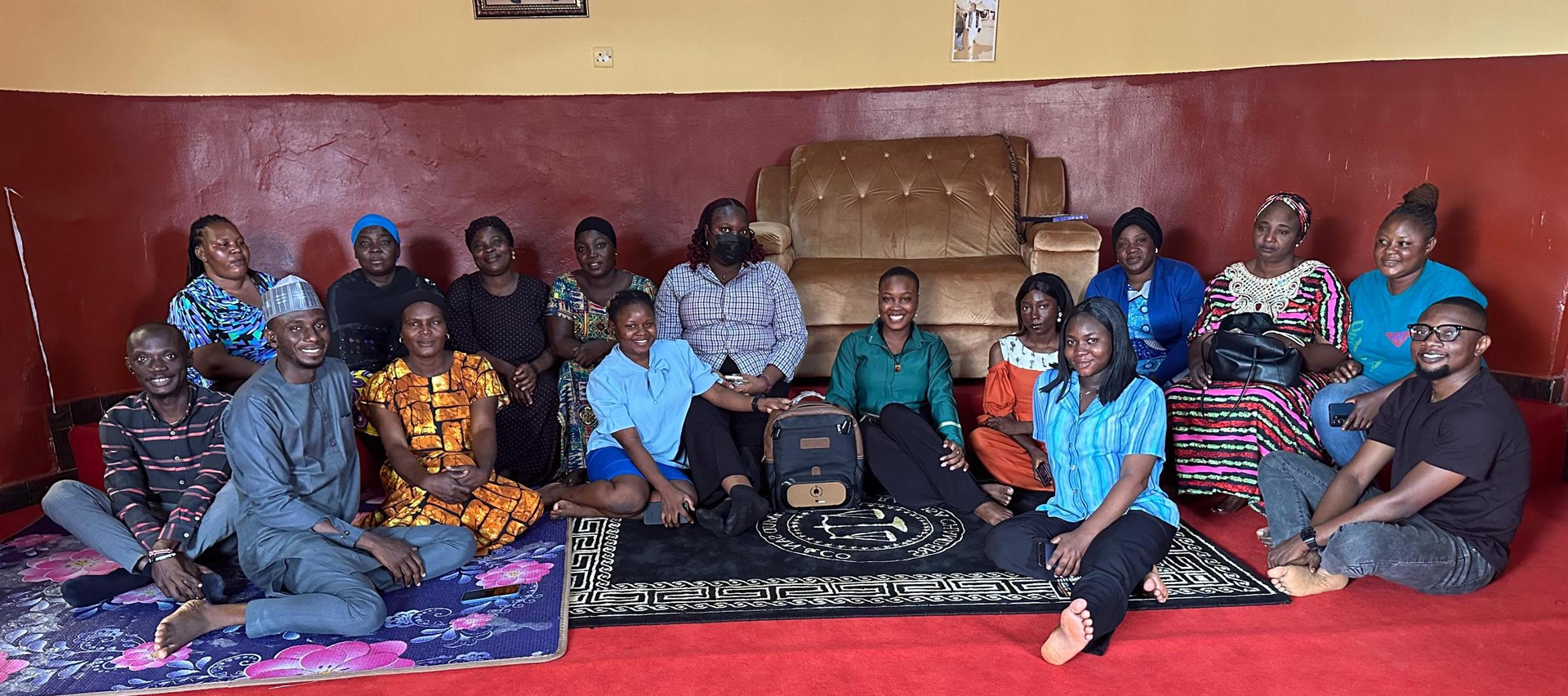
SolarPack Community Scale-Up is another solar-powered innovation project: a backpack that works as a personal energy hub. In peri-urban neighbourhoods of Abuja, Nigeria, communities overlooked by national grid investment can face power outages lasting more than nine hours a day. To respond to this, the SolarPack team is building the backpack to put locally owned energy in people’s hands, so homes, small businesses and learning can carry on through outages. Emerging from close collaboration with the community, which gives residents a real voice in how local energy services are designed, the project aims to grow into a community-owned micro-enterprise that creates local jobs and builds technical skills as community members are trained to distribute and maintain the technology. The innovation responds to the way people live and move through their urban environments, offering an alternative energy source that is practical, reliable and adapted to its surroundings.
What we are most inspired by is that neither GIG Fund project treats innovation in isolation. Energy solutions only help when they respond to the unique needs of their users. Accessibility, affordability, local ownership and adaptation to local environments are built into the design, and they decide whether a technology works in practice and becomes part of a community. Innovation is about more than creating a new technology or system. It is about making it work for the people who need it, and making it last.
The GIG Fund projects show how a solidarity funding model could replace legacy top-down development aid, as GIG continues to empower our network’s grassroots innovators. When communities bring their own innovative solutions to the challenges they face, they can create real, feasible change towards more sustainable urban futures, and the impact doesn’t have to stop there. Because these locally implemented innovations are open source and openly documented, others can adapt and apply them to their own challenges, creating a ripple effect across communities in other urban settings. Whether it’s solar-powered backpacks or circular materials, we hope this inspires you to act on the challenges you recognise in your community.
In part two, we’ll meet the projects in urban innovation, education, and disaster resilience. Learn more about the GIG Fund and 2026’s cohort here.
