 Written by
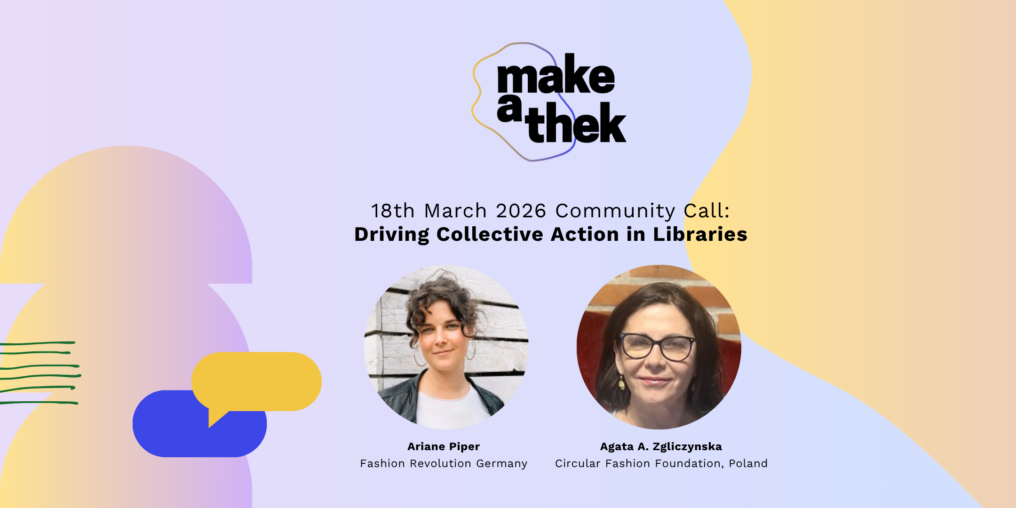
 Together with Fashion Revolution Germany and Circular Fashion Foundation Poland, GIG hosted a make-a-thek community call that brought together library practitioners and circular fashion advocates to explore how libraries can become meeting points that connect communities around advancing circular fashion. Our speakers included Ariane Piper (Fashion Revolution Germany e.V.) and Agata A. Zgliczynska (Fundacja Mody Cyrkularnej/ Fashion Revolution Polska), who shared insights on how local circular fashion initiatives can connect to a global movement.
During the community call, Ariane shared how the movement grew from a deeply personal moment of crisis, the 2013 building collapse in Dhaka, Bangladesh. She spoke about how designers and researchers came together in response, and how what started as a campaign asking where our clothes come from has since grown into a movement active in seventy countries.
Ariane walked us through Fashion Revolution’s work through the make-a-thek project, describing how libraries have become much more than information spaces. She described how Fashion Revolution has turned libraries into circular fashion makerspaces and community hubs, and shared stories of clothes exchanges, open conversations, and workshops where people from all walks of life come together to organise events and source materials collaboratively.
Agata then took the floor to talk about what has been working with young audiences in Poland. She described the Foundation’s gamification approach, inviting students to explore materials hands-on, trace where they come from, and reflect on their global impact. What struck participants in the call was how this shifts young people from passive learners into active creators.
Both Ariane and Agata reflected on how their respective organisations sustain this work, pointing to grants and partnerships with institutions like the Goethe-Institut and the European Commission, and emphasising how much they rely on community feedback to keep programmes relevant. They also spoke candidly about the role individual volunteers play in keeping local networks alive. Additionally, on the question of integrity, both speakers shared how they think carefully about transparency and independence in their industry relationships, and mentioned using KPI indexes to assess collaboration quality.
Despite the enthusiasm shared throughout the call regarding preserving craftsmanship and advancing circular fashion, both organisations were honest about the challenges they face. They described real funding and visibility gaps between production regions and consumer markets, particularly in the Global South, which limit access to equipment, training, and resources. They spoke about their responses to this: translating materials into multiple languages, advising governments on textile policy, and expanding networks so more communities can participate on equal footing.
The call left participants with a strong sense of what collective action and community participation can achieve in the fashion industry. Both organisations showed how fostering collaboration across borders, engaging diverse communities, and prioritising transparency can raise awareness of ethical fashion and empower individuals to become agents of transformation. Their ongoing efforts to bridge resource gaps, adapt to local needs, and uphold integrity are what keep this movement relevant and growing. As the conversation wrapped up, the message was clear: as more people join this global initiative, the momentum for a fairer, more sustainable fashion system continues to build!
Watch the full video for a deeper look at these projects, and subscribe to our monthly newsletter to stay up to date!