 Written by
Making, mending, music and a little chaos at Cape Town Central Library. Our first re:make Festival showed us what happens when people, skills and ideas come together.
Cape Town | 12–17 October 2026
Who would have thought we’d have children rapping in the library, sewing machines humming, people making music from discarded objects and a group of enthusiastic volunteers tackling a blocked drain?
Well, that’s pretty much how our first re:make Festival unfolded at Cape Town Central Library.
Under the theme A week for things worth keeping, we brought together makers, designers, repairers, students, volunteers and library staff for six days of making, mending, experimenting and sharing skills.
We wrapped up on Saturday, 17 October, with International Repair Day, celebrating the global theme Repair Brings Us Together.
And we discovered that what people took away wasn’t always something they’d made or fixed.
Cape Town joins the global repair movement
This year, “Global Innovation Gathering (GIG)” (https://globalinnovationgathering.org/) and the EU-funded “make-a-thek” (https://www.makeathek.eu/) project became official partners of International Repair Day, coordinated by “The Restart Project” (https://therestartproject.org/).
For GIG, working with grassroots makers and innovators around the world, repair is hardly a new concept. It’s part of everyday life in so many communities — making do, adapting, finding new uses for things and sharing knowledge.
So it seemed only fitting to bring the global celebration into our Cape Town make-a-thek pilot.
And Cape Town officially joined the global International Repair Day map!
Rather than celebrating for just one day, we decided to make a week of it.
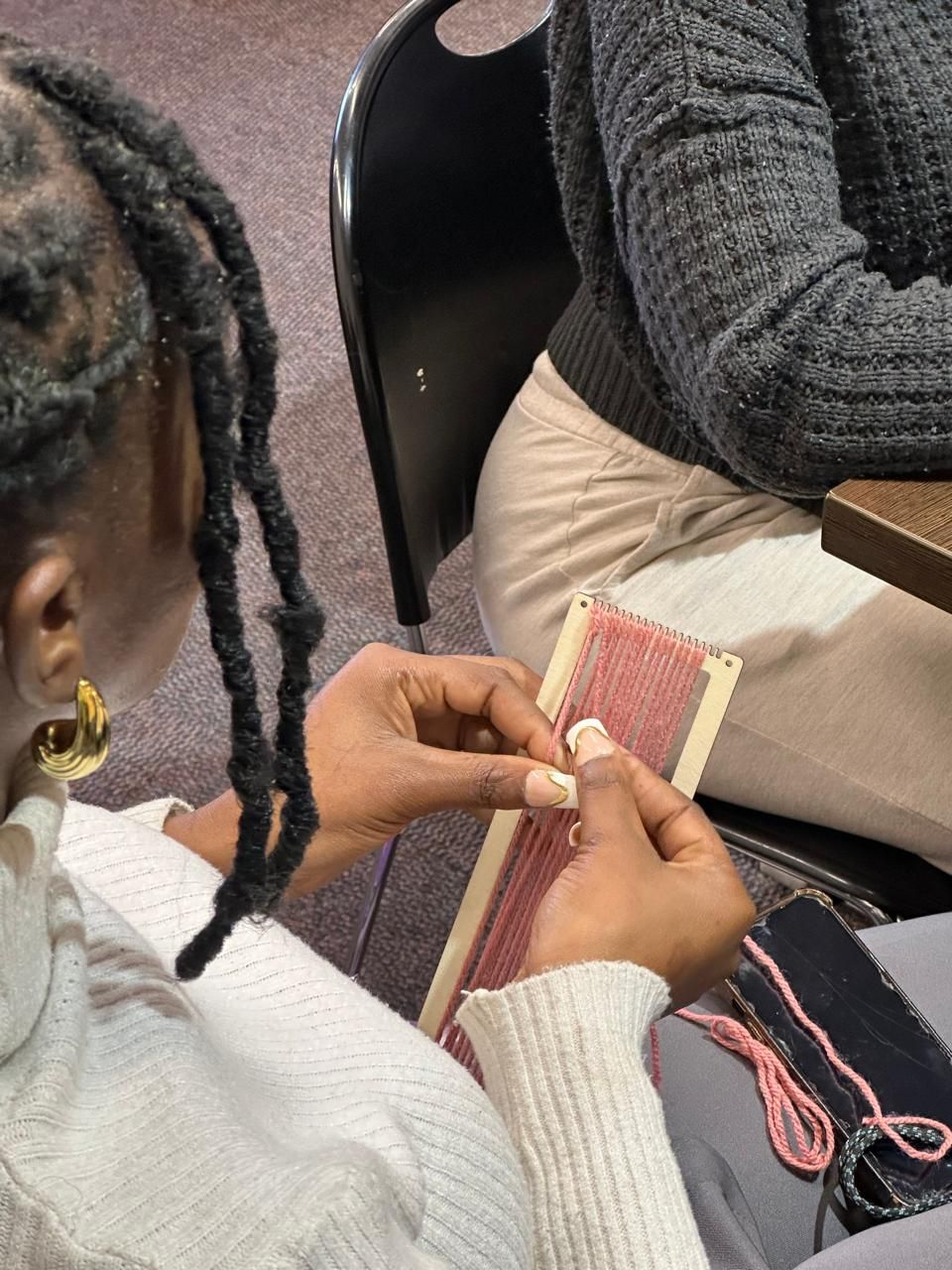
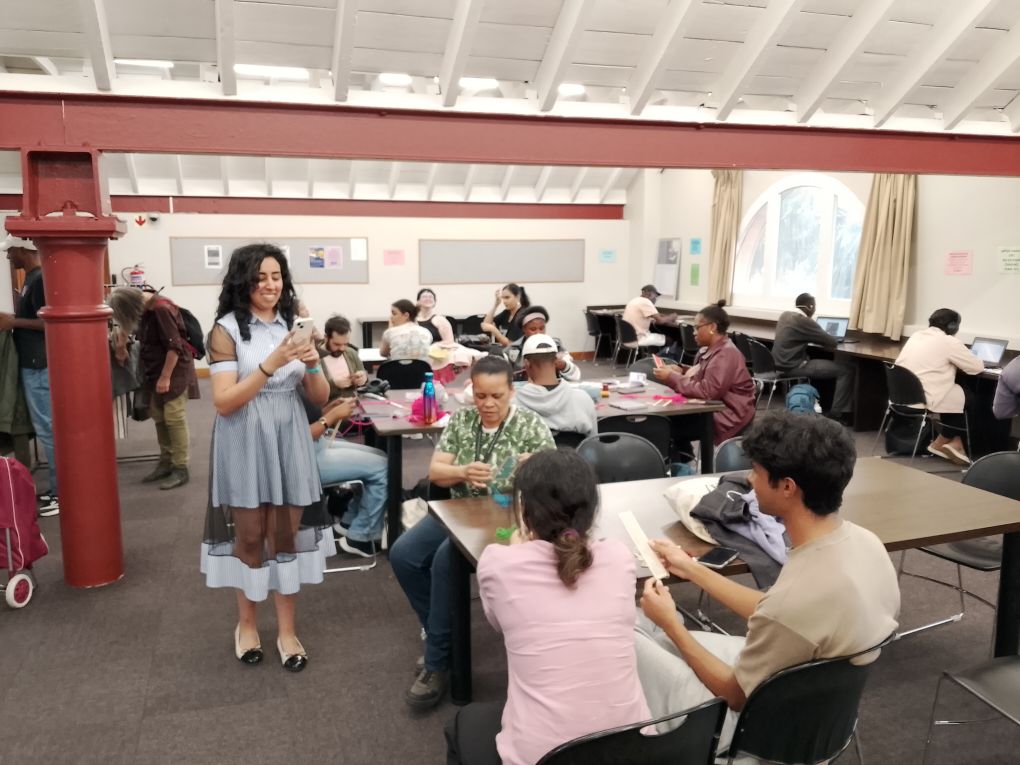
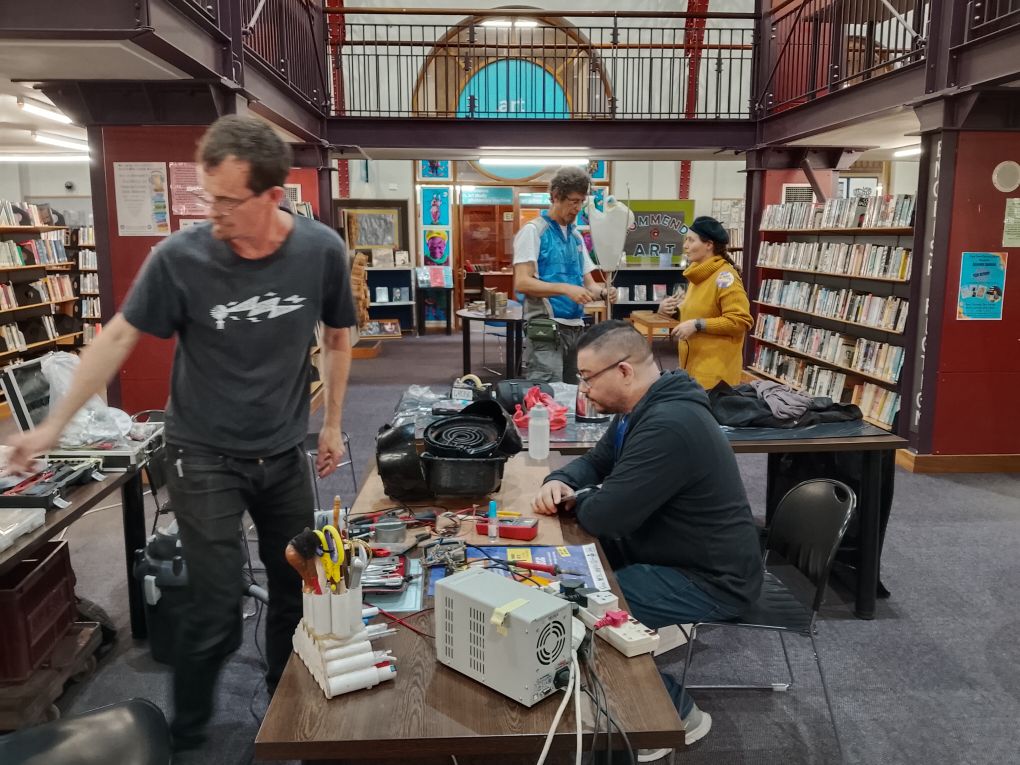
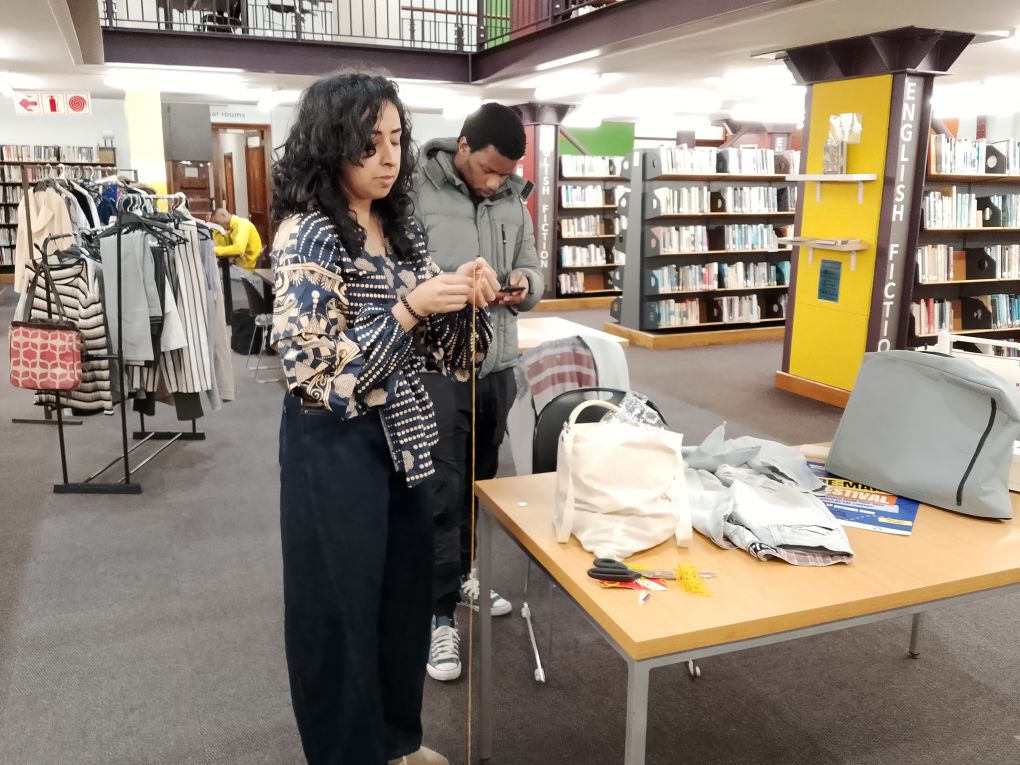
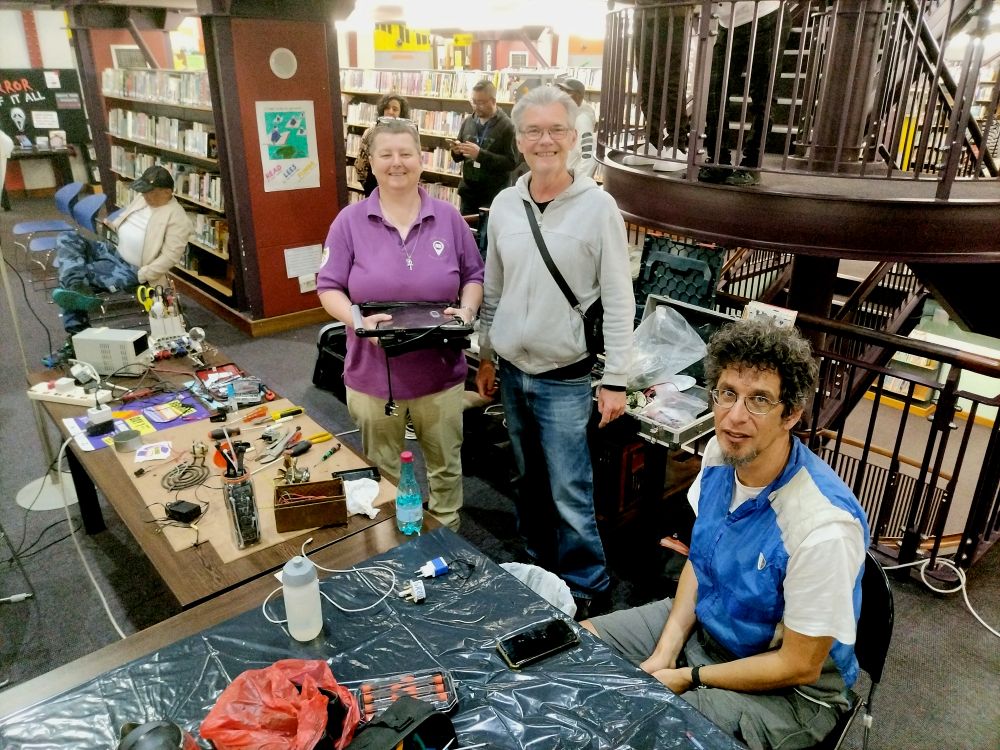
The festival became our public kickoff at Cape Town Central Library, working with the City of Cape Town’s Library and Information Services Department to explore what a library-based making and circular innovation space could become.
Giving the library some love
We started with the library itself, exploring how practical activities could create opportunities for learning, volunteering and caring for shared resources.
Together with Carlita Bezuidenhout and the Zlto team, we developed tasks for volunteers to take on, from caring for books and materials to hands-on activities involving library furniture and equipment.
Zlto allows people to earn credits for their contributions, recognising the value of their time and skills.
Carlita and her team helped onboard participants, add and update tasks, troubleshoot the app and iron out a few glitches as we went. A proper live experiment!
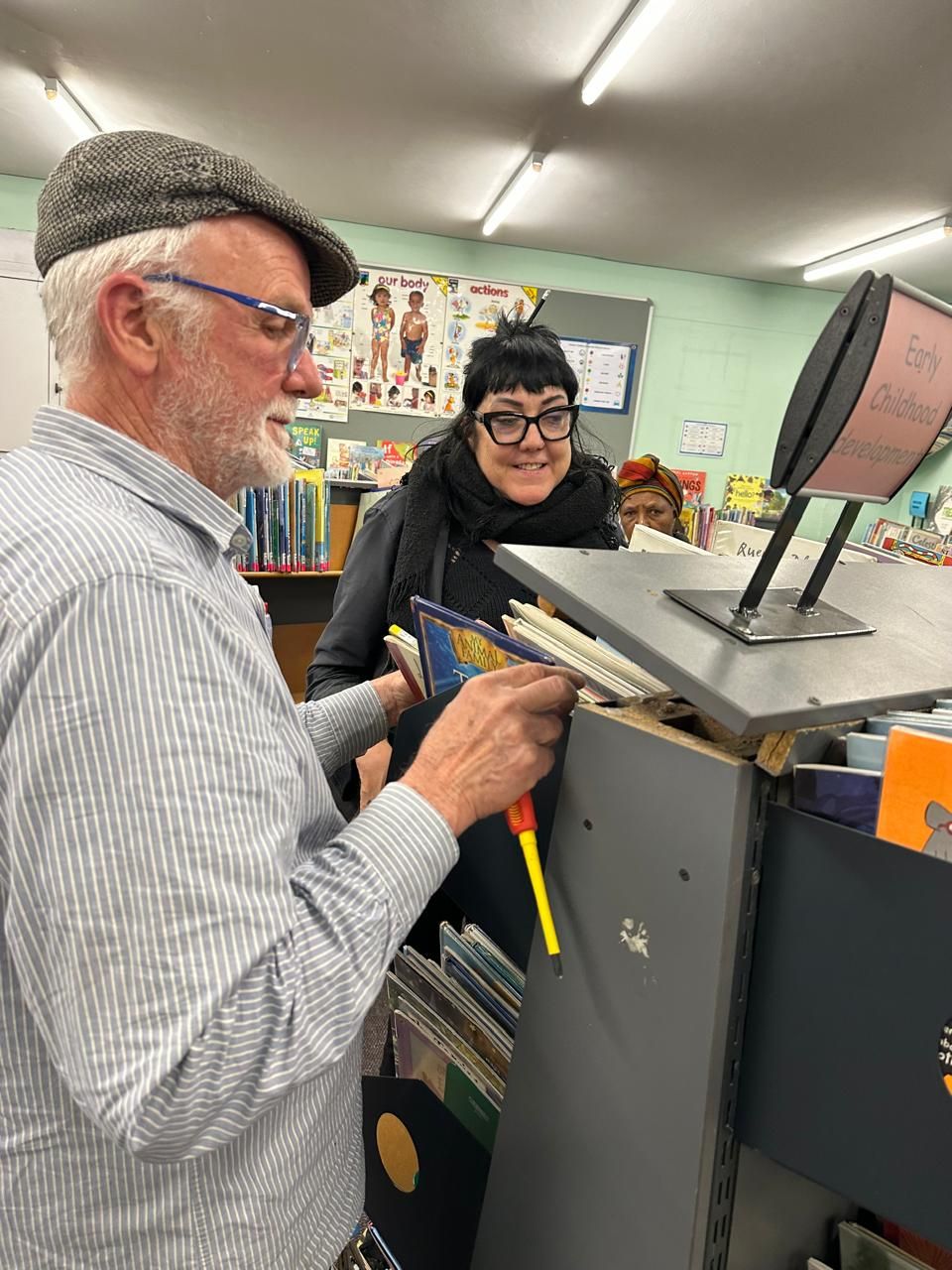
Meanwhile, Yusuf Vawda and Menzi Design Lab at UCT guided students through practical challenges involving children’s tables, trolley wheels and other small projects, working alongside library staff.
One volunteer even discovered an unexpected enthusiasm for organising the scores in the Egg Room!
And we’re not finished. Yusuf and the team are continuing to explore wheelchair ramp solutions for the library courtyard, working with the library service on an accessibility design challenge that needs more time and development.
Not everything can — or should — be finished in one week.
Fashion, mending and new discoveries
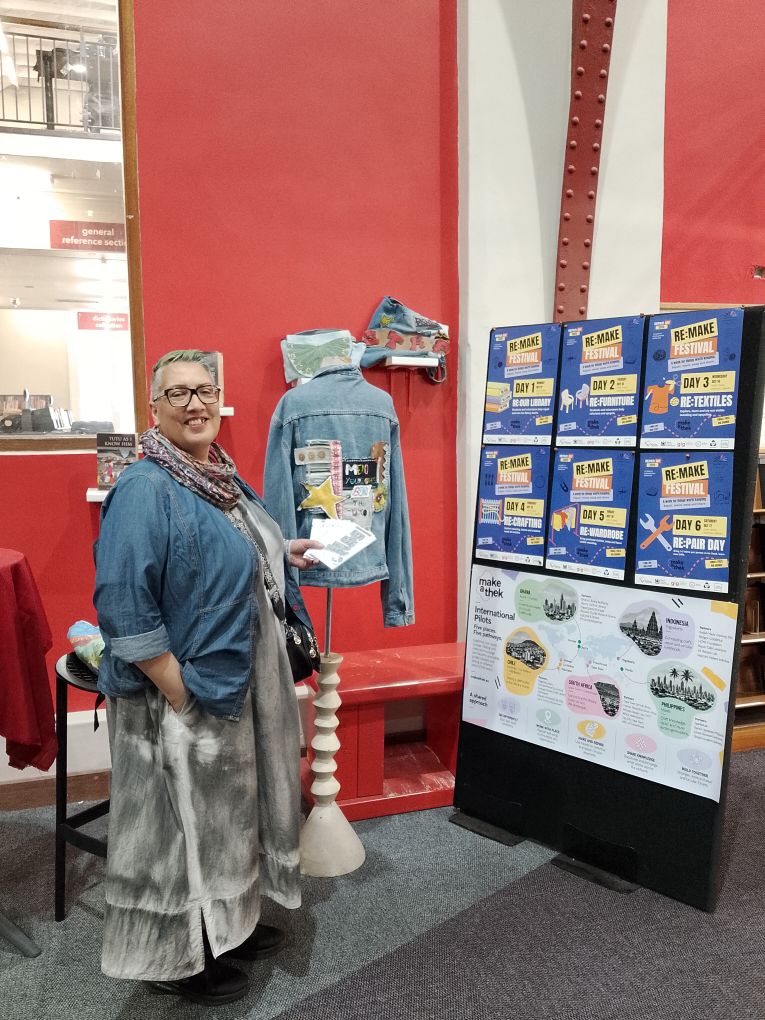
Safiyya Karim and Fashion Revolution South Africa brought sashiko, visible mending, weaving, a clothing swap and a wonderful collection of creations from Peter Clarke School into the library.
One particularly shy young girl spent time studying the garments on display, asking questions about the designs. Later, I spotted her outside with two books she’d bought about fashion and sewing.
Something had sparked!
Schoolchildren told us how sewing helped them destress during exam week.
And a gentleman who’d never sewn or knitted before discovered a new passion, borrowed knitting books from the library and had already taken on a commission to make a jersey!
The clothing swap also showed how much value remains in what we already have. For some participants, including people experiencing homelessness, it meant getting clothes they hadn’t been able to replace for a long time.
There were opportunities for emerging designers to showcase their work, and Fashion Revolution South Africa shared a fabulous little DIY or Die zine, which we’re planning to print for the 13 European and five global make-a-thek pilots.
A little bit of Cape Town creativity travelling rather far!
So much for the library shhhhh!
Then Brendon Bussey and the Crank Corp team brought their upcycled musical instruments into the library.
Suddenly there was rhythm, experimentation and a rather impressive amount of noise!
Schoolchildren embraced the opportunity to make a racket, while one particularly shy aspiring rapper began finding his confidence amongst the chaos.
It’s not every day you’re encouraged to make that much noise in a library.
But making isn’t always about producing something. Sometimes it’s about discovering what you can do when someone gives you the opportunity to try.
Repair Brings Us Together — quite literally
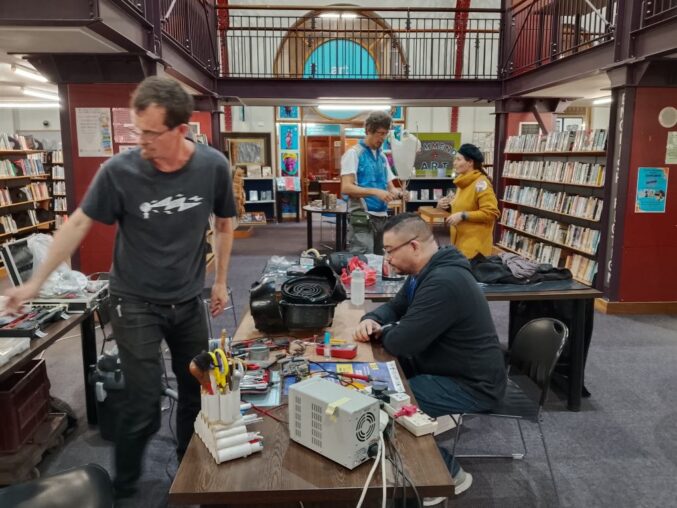
Throughout the week, members of the Cape Town Repair Café community shared their tools, skills and willingness to investigate pretty much anything.
From sentimental hammers to furniture and even a blocked drain, there was certainly no shortage of interesting challenges!
On Saturday, Paul Grose from Cape Town Repair Café arrived with a trolley packed full of what seemed like magical tools and equipment.
One particularly fitting collaboration saw Paul and Brendon Bussey from Crank Corp joining forces to tackle a camera.
Repair Brings Us Together in action!
Paul also introduced library staff to the art of cannibalising useful components from things beyond saving. Rather than simply handing something over to be fixed, people were learning to diagnose problems, ask questions and have a go themselves.
That’s the bit I find particularly valuable.
Repair isn’t just about keeping objects working. It’s about keeping knowledge alive and giving people the confidence to try.
And none of this happens without the library
A huge part of the week’s success came from the willingness of the library team to embrace some rather unconventional activities.
Flippie van der Walt, Rosalind Hendricks and colleagues from the City of Cape Town’s Library and Information Services Department helped us bring the programme together, identify opportunities and make space for all the different activities.
Library staff weren’t simply hosts. They joined workshops, shared ideas, participated in activities and learned alongside everyone else.
Libraries already have the books, knowledge, space and communities.
Add some tools, materials and people willing to share their skills, and things start to get interesting.
And this is only the beginning
Although re:make was our first big public festival, the Cape Town make-a-thek pilot had already started experimenting in September.
Together with Safiyya Karim and Fashion Revolution South Africa, and Reghard Goussard and the ARC of Franschhoek, we hosted a natural dye workshop using locally available plant materials from vegetation being cleared or managed.
We’re now developing a material library of plant specimens, dye recipes, colours and textile samples, with possible applications for future ARC staff uniforms.
Imagine wearing colours derived from the landscape you work in!
Fashion Revolution South Africa is also establishing a circular business headquarters through the pilot, creating opportunities to take textile making, mending and upcycling beyond individual workshops and towards circular enterprises.
And in November, Yusuf Vawda from Menzi Design Lab will be taking our early Cape Town experiences to the AfriLabs and Makerspaces Africa gatherings in Benin, sharing what we’re learning with the wider African maker community.
There’s also a connection to Fab City Cape Town, which officially pledged to join the global Fab City Network at FAB26 Boston earlier this year, alongside Accra and Kumasi as three new African members.
The ambition to be locally productive and globally connected is starting to take shape through practical collaborations like these.
So, what’s next?
Well, we certainly didn’t finish everything on our ambitious to-do list!
There are still tasks to complete, ramps to design, materials to explore and plenty of ideas worth trying.
But that’s the point of a pilot. We’re experimenting, learning what works and figuring out how to build on it.
The week showed what can happen when organisations bring their different skills together and people are given the space to participate.
And some of the most interesting outcomes weren’t the ones we’d planned.
A child leaving with two sewing books. Someone discovering knitting for the first time. A young rapper finding his voice. Library staff looking at broken equipment a little differently.
These moments might not look particularly impressive on a project spreadsheet, but they’re exactly why this work matters.
If all this can happen in one week, imagine what could happen when making, mending and sharing skills become part of everyday library life.
We called it A week for things worth keeping.
Turns out, some of the most valuable things worth keeping aren’t things at all.
And we’re only just getting started!
About the Cape Town make-a-thek pilot
The Cape Town pilot is part of make-a-thek, a European Union Horizon Europe-funded project exploring how libraries can become accessible spaces for circular making, traditional crafts, textiles, technology and community innovation.
Global Innovation Gathering (GIG) leads the international pilot activities. The Cape Town library pilot is hosted at Cape Town Central Library, in collaboration with the City of Cape Town’s Library and Information Services Department.
Local collaborators and contributors include Fab City Cape Town, Africa Makerspaces, Fashion Revolution South Africa, Menzi Design Lab at UCT, the ARC of Franschhoek, Zlto, Crank Corp and the Cape Town Repair Café community.
Links —–
Explore: “GIG” (https://globalinnovationgathering.org/) | “make-a-thek” (https://www.makeathek.eu/) | “International Repair Day” (https://repairday.org/) | “Fab City” (https://capetown-fab.city/)
