 Written by
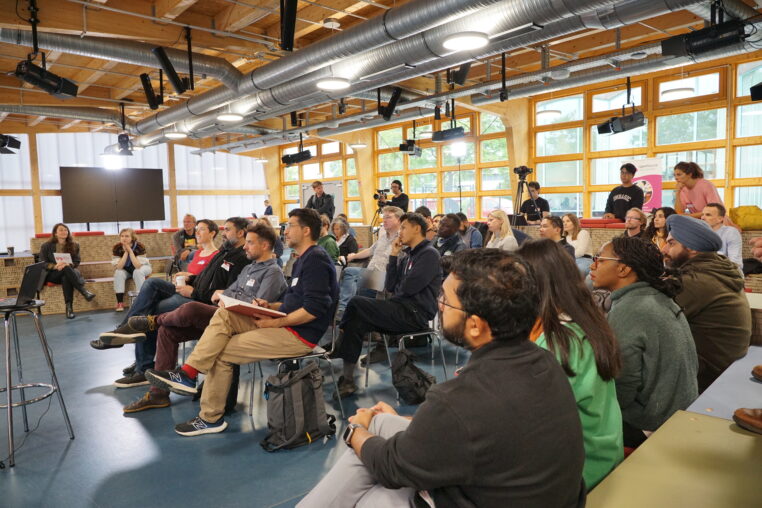
 This year’s GIG week was welcomed by a very special and exciting gathering. On Sunday, May 25th, GIG members from across the world gathered at the Zentral- und Landesbibliothek Berlin for the first GIG reunion of 2025, a dynamic showcase of open, circular, and regenerative innovation that set the tone for the week ahead.
Across four thematic sessions, GIG members gave talks, ran workshops, and presented projects tackling some of the most pressing questions in sustainable innovation today: how do we protect climate data from censorship? How do we build learning cultures that heal rather than sort? What does a genuinely circular economy look like in practice? And how do we make hardware accessible to the people who need it most?
Protecting climate data from censorship and misinformation
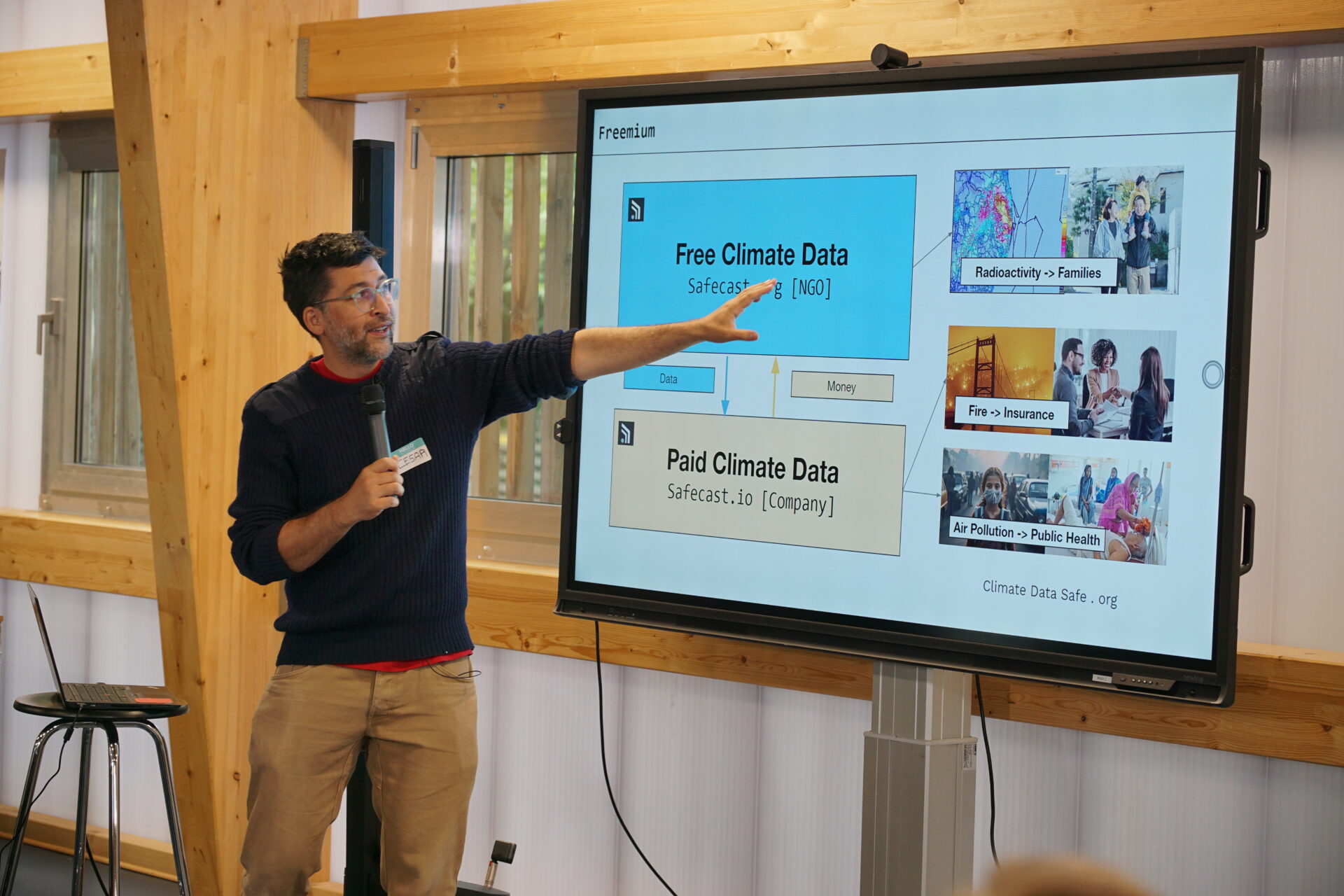
The event opened with a session on open data and its role in the climate crisis, a theme with growing urgency as certain interest groups move to obscure, politicize, or remove climate information from public access.
New GIG member Cesar Jung Harada, founder of Climate Data Safe, presented tools and platforms that allow individuals to collect, share, and verify climate data, building a global ecosystem of protection against efforts to hide key environmental indicators. Eric Nitschke introduced WeRadiate, which uses temperature probe technology and data analytics to monitor soil conditions and make soil health information more intuitive and accessible. Emilio Velis presented Appropedia, an open wiki for documenting sustainable and open-source solutions, where anyone can contribute, edit, and preserve knowledge.
Together, these projects made a strong case for community-held data as a form of resilience.
Regenerative learning
The second session examined what education looks like when it moves away from standardised, market-driven models and back toward self-directed growth, community, and care.
Rosanna Lopez, founder of SparkleLab, led a workshop on introducing more play, flexibility, and student agency into formal education. Her open-source app is designed to spread regenerative learning approaches across institutions. Vaibhav Chhabra, a maker community leader, shared the work of MASH and Maker Asylum, two initiatives using makerspaces and learning cultures to support youth entrepreneurship and community building, including a project that creates musical instruments for disabled individuals. Saad Chinoy presented SalvageGarden, a makerspace where people with disabilities build their own assistive devices, developing skills while challenging a market that has historically offered them little agency.
Repair cultures
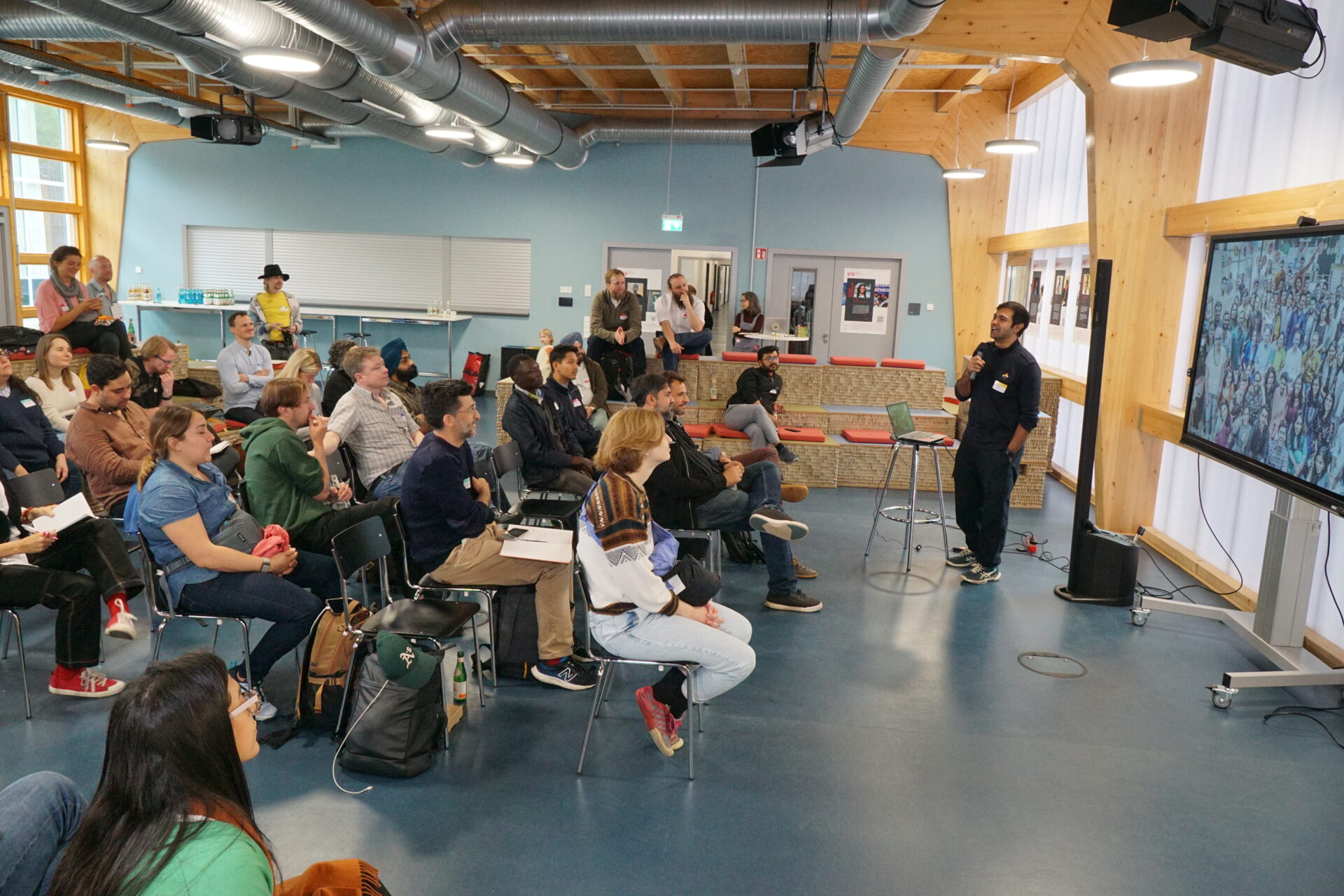
The third session turned to circularity and the economies it can help build. As large companies generate enormous material waste and political momentum for sustainable alternatives remains contested, repair, reuse, and recycling represent a practical and community-centred pathway forward.
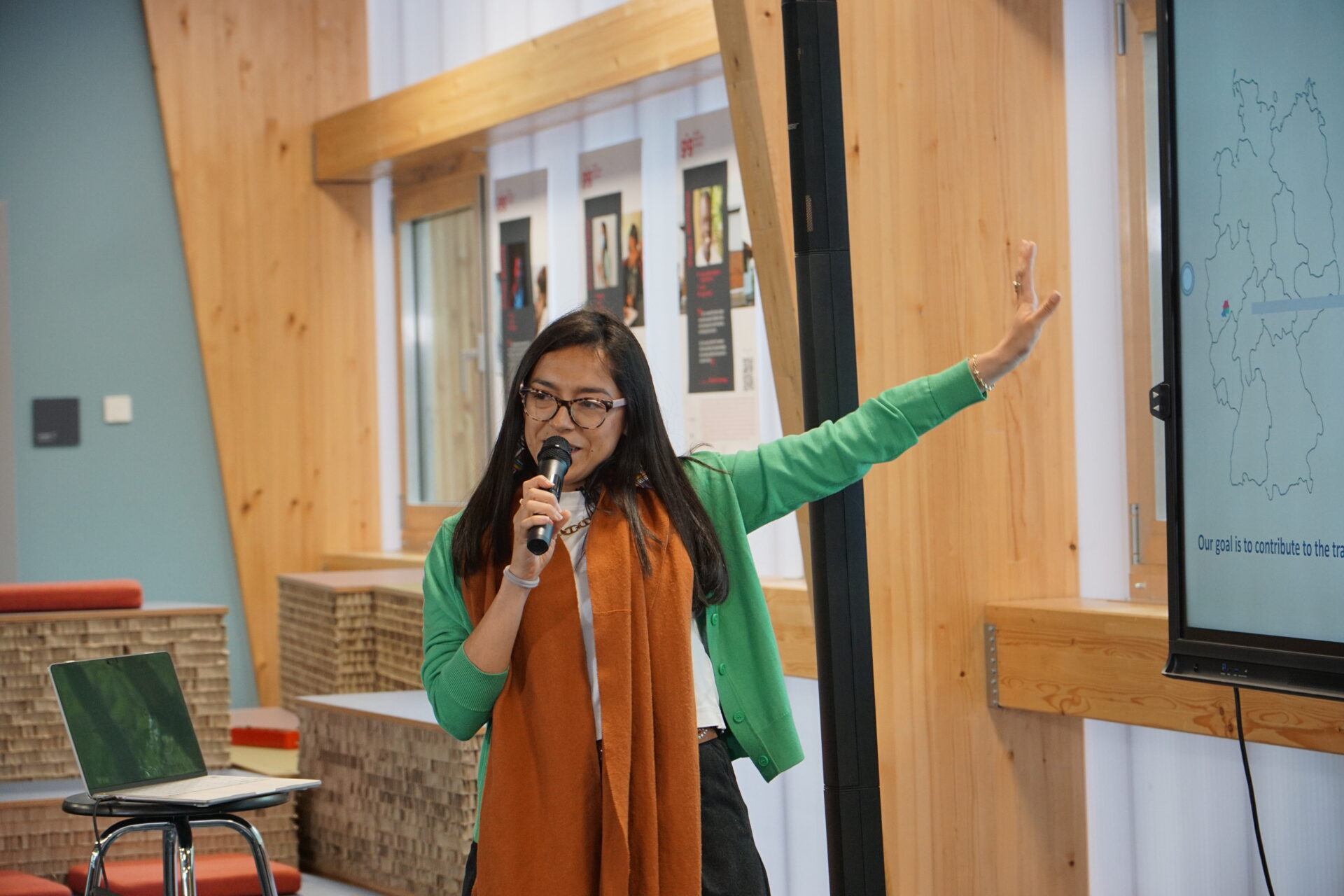
Mathew Lubari, founder of CC4D (Community Creativity for Development), opened with a reflection on African countries’ particular position: rich in raw materials but vulnerable to the waste produced by their extraction. CC4D responds by teaching repair and upcycling practices and developing LED systems and mobile solar chargers for communities without reliable electricity. Felipe Fonseca, representing Reuse City, presented a citizen social science initiative building a curriculum to help people engage more meaningfully with circular practices and support their own creative processes. Adriana Cabrera, representing the FABCARE network, introduced FAB Region, a network of makerspaces in the Bergisch city triangle working across different dimensions of sustainability through a collaborative regional approach.
Open-source hardware for global access
The final session focused on hardware: how it is designed, who it is designed for, and what it costs, both financially and environmentally.
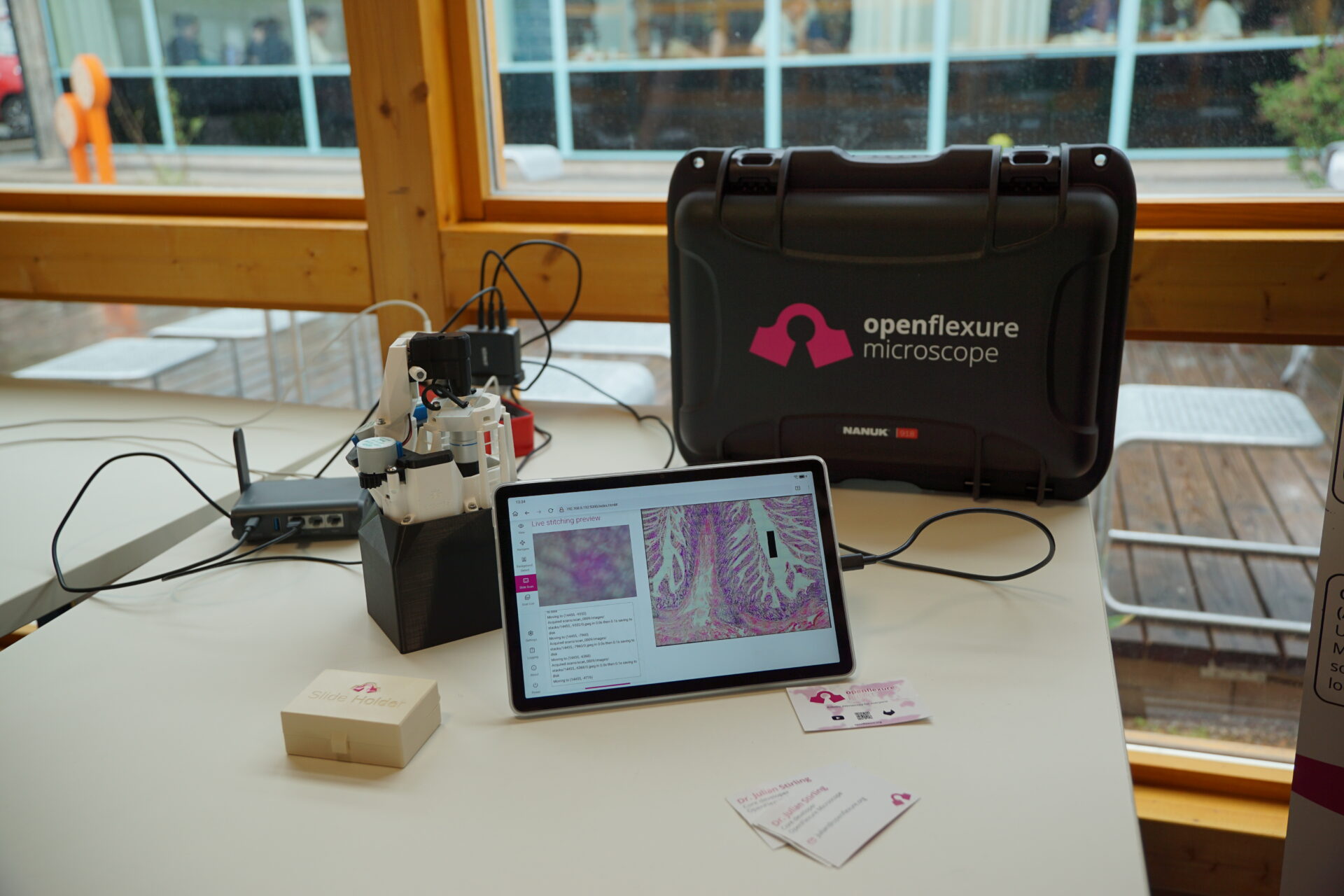
Sara Diaz, founder of HILO, a Berlin-based textile association, shared about the Open Mill Project, an open-source yarn lab in Nigeria that is designed to empower local designers in material recycling and sustainable textile production. The lab draws on HILO machines, sustainable textile hardware developed by Sara’s association, and is grounded in preserving Nigerian traditional crafts. Julian Stirling introduced OpenFlexure, a portable, open-source microscope that can be built from widely available materials. Developed to address the lack of diagnostic equipment in under-resourced settings, OpenFlexure enables the diagnosis of conditions like cancer and malaria in remote areas, and includes digital features for training and communication.
A great start to GIG Week 2025
This gathering was exactly the kind of opening GIG Week needed. Members approached open, sustainable, and regenerative innovation from many different angles, but the common thread was clear: practical, community-driven work oriented toward a better future for people and planet. By bringing these projects and perspectives into the same room, GIG does what it does best: turn the exchange of ideas into something larger than any single initiative. Watch the video highlights here:
We are so excited about GIG Week 2026, coming up in less than a month, and about gathering as a community once again. Learn more about what’s in store here.